
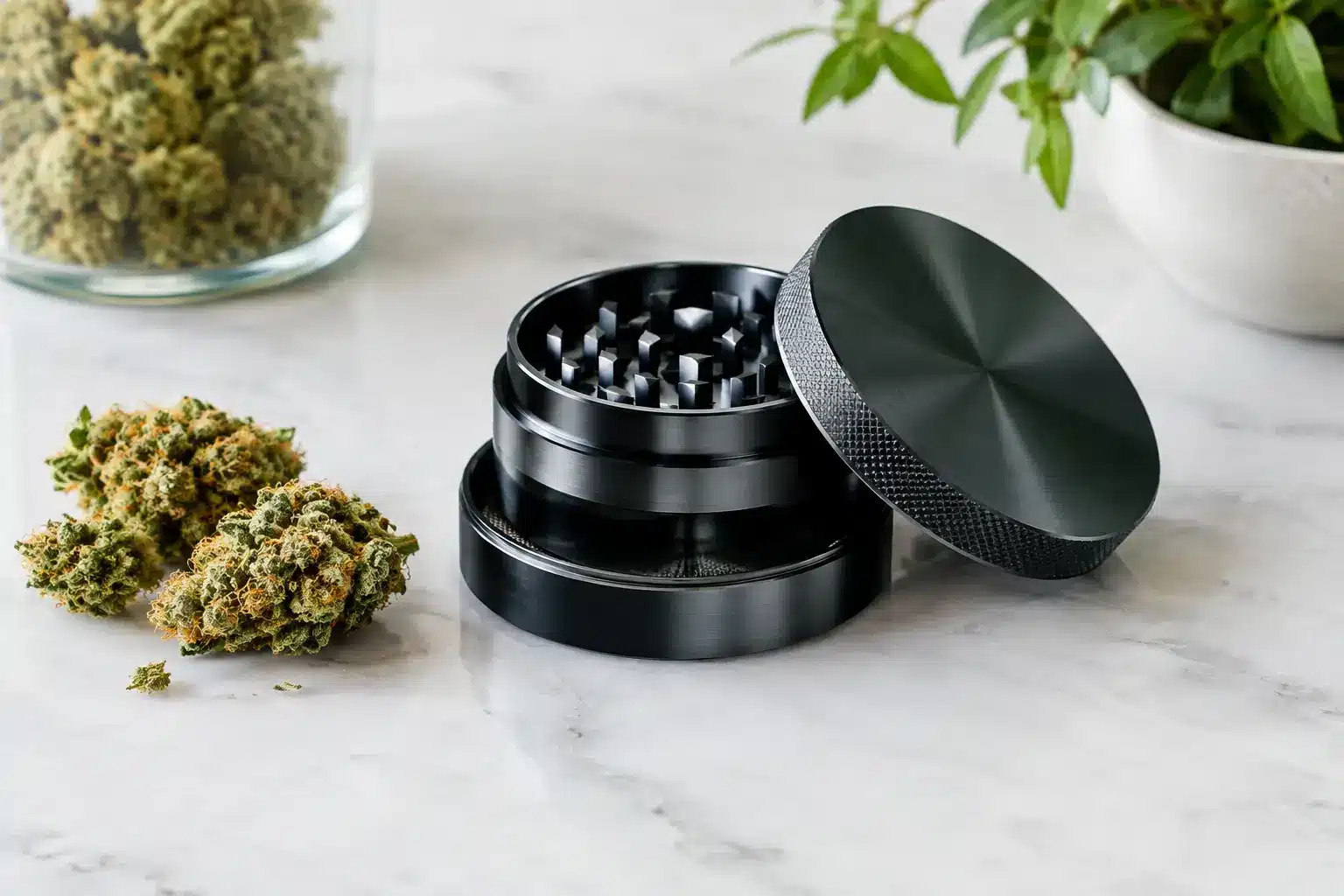
A compact grinder gets judged the moment it leaves the house. It has to fit a pocket or small bag, open without a fight, and produce an even, usable grind without turning a quick prep session into a mess. This compact grinder review focuses on what separates a genuinely capable small grinder from the lightweight, dull-toothed novelty pieces that look good for a week and disappoint for years.
Small does not have to mean compromised. But it does mean the engineering matters more. With less diameter, less leverage, and less chamber space, every detail – tooth geometry, material choice, magnet strength, and machining accuracy – has a direct effect on how the grinder feels in your hand and how your herb comes out.
Compact Grinder Review: What a Small Grinder Must Do
A compact grinder should be easy to carry, but portability is only the starting point. The better question is whether it can handle daily use without jamming, cross-threading, shedding finish, or producing an inconsistent texture. Cheap compact grinders often fail because their small size exposes every shortcut in their construction. Weak teeth struggle with denser flower. Loose lids pop open in a bag. Coarse threads bind after a little buildup.
A premium compact grinder is designed to avoid those problems rather than asking you to work around them. Precision-cut teeth should pull herb into the cutting pattern efficiently instead of crushing it at the edges. The lid should close with confidence. The body should feel solid enough to resist flexing, yet compact enough to disappear into a pocket.
For most adult cannabis consumers, the ideal compact size is large enough for a personal session or a couple of bowls, not a full group grind. That is the trade-off. A smaller diameter reduces carrying bulk and makes the tool easier to control, while a larger grinder processes more flower with less effort. Choose compact when mobility and discretion matter more than maximum capacity.
The Material Test: Why Aluminum Wins
Material is where serious grinders separate themselves from disposable accessories. Plastic is inexpensive and light, but its teeth wear down, its body can flex, and it can hold odor over time. Zinc alloy grinders may feel heavy, yet weight alone is not proof of quality. Many are cast rather than precisely machined, which can leave inconsistent teeth, rough edges, and threads that eventually bind.
6061-T6 aluminum is the right material for a performance grinder because it delivers strength without unnecessary weight. It machines cleanly, resists corrosion, and supports the tight tolerances that make a grinder feel precise rather than sloppy. A CNC-machined aluminum grinder also gives the manufacturer control over the details that casting cannot match consistently: tooth shape, chamber fit, edge finishing, and lid engagement.
That control matters in a compact format. A small grinder has less room for error. If the lid rocks, the teeth are dull, or the halves do not align correctly, the user feels it immediately. Tahoe Grinder Co machines its grinders in-house in the USA, controlling design, production, inspection, and fulfillment rather than relying on anonymous imported inventory. For buyers who are tired of guessing what is inside a generic smoke-shop grinder, that manufacturing ownership is a real advantage.
Tooth Design Determines the Grind
The number of teeth is not the whole story. Tooth profile, spacing, sharpness, and placement determine whether a grinder cuts cleanly or mashes herb into uneven clumps. A good compact grinder uses a cutting pattern that keeps material moving through the chamber. It should not require excessive force, repeated twisting, or a shake-and-hope routine to get an even result.
Sharp, properly spaced teeth create a more consistent texture. That consistency matters whether you are packing a bowl, loading a dry herb vaporizer, or rolling. Overly chunky pieces can burn unevenly. Material ground too fine may pull through certain screens or restrict airflow. The goal is a controlled, fluffy grind that is easy to portion and burns predictably.
Dense, sticky flower is the real test. Nearly any grinder can handle dry, loose herb. When resinous flower enters the chamber, poor tooth geometry and loose tolerances reveal themselves fast. A quality compact grinder should still turn smoothly under normal hand pressure. It will need occasional cleaning – no grinder is immune to buildup – but it should not become a seized-up accessory after a handful of uses.
Magnetic Lids Beat Fussy Threads
Threaded grinders can work well when they are machined accurately, but threads are also one of the first places cheap grinders become annoying. Fine plant material collects in the grooves. Cross-threading becomes possible. Opening the grinder can turn into a two-handed task when you only wanted a quick session.
A thread-less magnetic lid eliminates that friction point. Strong magnets hold the top securely while allowing fast access, making this design especially useful for compact grinders meant to travel. The lid should seat cleanly, stay put in a pocket, and lift off without forcing you to twist around packed material.
Magnetic construction is not an excuse for a weak fit. A poorly designed magnetic lid can rattle, misalign, or separate too easily. The best examples pair reliable magnetic retention with a precisely machined mating surface, so the grinder closes squarely every time.
Choose the Right Chamber Configuration
Compact grinders come in 2-piece, 3-piece, and 4-piece designs, and the right one depends on how you use your herb. There is no universal winner.
A 2-piece compact grinder is the cleanest, fastest option. It grinds and stores the material in the same area, making it ideal for someone who values minimal size and a direct workflow. It is also easier to clean because there are fewer parts and no screen to maintain. For daily carry, this is often the strongest choice.
A 3-piece grinder adds a storage chamber below the teeth. This gives you a place to collect ground herb without mixing it back into the cutting area. It is useful when you want to grind slightly more than you plan to use immediately, though it adds height and reduces the simplicity that makes compact grinders appealing.
A 4-piece grinder includes a screen and lower collection chamber. It offers the most separation and may appeal to users who prefer a multi-chamber setup. The trade-off is capacity and maintenance. In a compact form factor, each extra chamber takes away from the available grinding volume. If your priority is an ultra-portable everyday tool, a 2-piece or low-profile 3-piece design usually makes more sense.
What to Check Before You Buy
Do not buy a compact grinder based on color, novelty artwork, or an oversized product claim. Look at the construction. The grinder should be made from a known, durable material. Its teeth should appear cleanly machined rather than rough or rounded. Its lid should close securely, and its edges should feel smooth in the hand and safe against pockets or bags.
Also consider where the grinder comes from and who stands behind it. A lifetime warranty is meaningful only when it is backed by a manufacturer with direct control over its products. Fast domestic fulfillment matters too. A serious accessory should not arrive weeks later in questionable packaging with no clear support if something goes wrong.
Price deserves perspective. A bargain grinder that clogs, loses teeth, or needs replacing every year is not actually the cheaper option. A well-machined compact grinder costs more because it is built to maintain its fit, cutting performance, and finish through real use. That is the difference between buying an accessory and buying a tool.
Keep a Compact Grinder Performing Like It Should
Even premium aluminum needs basic care. Brush out loose material regularly, especially around the teeth and mating surfaces. If resin begins to affect the action, clean the grinder before the buildup hardens. Avoid forcing the lid shut over an overloaded chamber, and do not use sharp metal objects that can scar the finished surfaces.
The right compact grinder earns its place by making every session easier without asking for much attention in return. Pick one that is engineered for the way you actually carry and prepare herb, then give it the small amount of maintenance a serious daily tool deserves.