
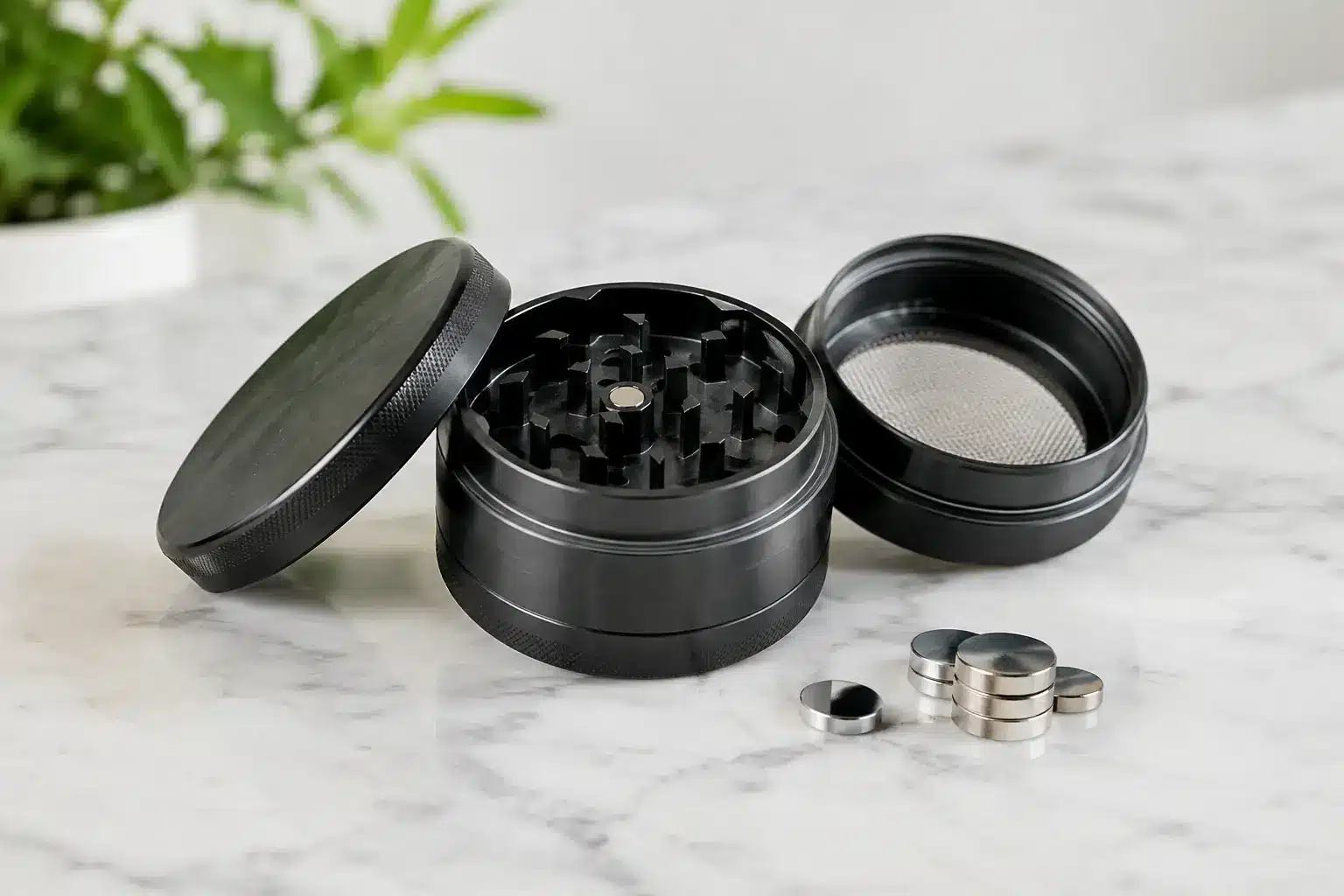
A magnetic grinder lid should snap into place with a clean, confident pull. When it feels loose, wobbles, or pops open too easily, the obvious question is: do grinder magnets weaken? Usually, no. Not under normal cannabis use. More often, a grinder that seems to have weak magnets has a buildup problem, a fitment problem, or a construction problem that was there long before the magnet got blamed.
A properly engineered magnetic closure is one of the best alternatives to threaded grinder lids. It is faster to open, less likely to cross-thread, and cleaner to use when your hands are covered in sticky herb. But the strength of that closure depends on more than the magnet itself. The material around it, the precision of the machining, and the way the lid meets the body all matter.
Do Grinder Magnets Weaken Over Time?
High-quality rare-earth magnets do lose a very small amount of magnetic strength over a very long period, but that is not the same thing as suddenly becoming weak after a few months of use. A well-made grinder magnet should remain effective for years of ordinary opening, closing, carrying, and grinding.
Permanent magnets are designed to hold their field. They do not wear down simply because you open the lid every day. There is no battery inside the grinder getting depleted. If the magnetic hold changes noticeably in normal use, look at the full assembly before assuming the magnet has failed.
The more common culprit is residue. Fine kief, broken plant material, and sticky trichome-rich buildup can collect around the lid lip and grinder rim. That material creates a tiny gap between the magnet and the surface it is pulling against. A gap that is barely visible can make a powerful magnet feel far less effective because magnetic force drops quickly as distance increases.
A loose-feeling lid can also result from poor machining tolerances. If the cap does not sit squarely on the grinder body, the magnets cannot make their intended contact. Cheap grinders often hide this problem behind oversized magnets, weak adhesive, or thin aluminum walls. The result may feel acceptable at first, then become frustrating as residue and everyday wear expose the sloppy fit.
What Actually Causes a Magnetic Grinder Lid to Feel Weak?
Magnets can be damaged, but real magnetic failure is much less common than the issues below.
Buildup around the lid and rim
This is the number-one issue. Resin can turn a clean, flush closure into a sticky, uneven connection. It may feel like the magnet has weakened when the lid is simply sitting higher than it should.
Clean the mating surfaces with a soft cloth or cotton swab. For heavier residue, use a small amount of isopropyl alcohol on the cloth, keeping excess liquid away from seams and magnet pockets. Let every surface dry completely before reassembling the grinder. Do not soak a magnetic lid unless the manufacturer specifically says it is safe to do so.
A dropped grinder or damaged magnet pocket
A serious drop can chip a brittle magnet, crack an adhesive bond, or deform the aluminum pocket holding the magnet in place. The magnet may still have plenty of pull, but if it shifts inside its pocket or sits at an angle, the lid will no longer close correctly.
This is where construction separates a serious grinder from a disposable one. A magnet needs a precisely machined seat that holds it securely and keeps it aligned. If the pocket is loose, shallow, or inconsistent, impact can turn a simple drop into a permanent closure issue.
Excessive heat
Rare-earth magnets can lose strength when exposed to high heat. Normal pocket carry, room temperatures, and regular cleaning will not do it. Leaving a grinder on a hot dashboard for extended periods, placing it near a heat source, or exposing it to unusually high temperatures can.
The exact temperature depends on the magnet grade, but the practical advice is simple: treat your grinder like a precision tool, not cookware. Heat is also hard on finishes, adhesives, and any residue caught in the moving parts.
Corrosion and low-grade materials
Many powerful magnets contain neodymium, which needs protective coating to resist corrosion. When a magnet is poorly coated or poorly sealed into its housing, moisture can compromise it over time. This is more likely in low-cost grinders where materials and assembly are chosen to hit a price point instead of survive years of use.
A premium aluminum grinder should protect the magnetic closure through careful material selection, clean assembly, and a design that does not leave the magnet unnecessarily exposed. The magnet is small, but it is not an area where shortcuts stay hidden.
Magnet Strength Is Only Half the Design
A stronger magnet is not automatically better. An overly aggressive lid can be annoying to remove, pinch fingers, or pull the grinder apart when you only meant to open the top. The goal is controlled holding force: strong enough to keep the lid secure in a pocket or bag, but balanced enough for quick one-handed access.
That balance starts with CNC machining. When the grinder body and lid are made to tight tolerances, the mating surfaces meet evenly and the magnet does its job without needing brute force. The closure feels intentional instead of random.
Material matters, too. 6061-T6 aluminum is a strong choice for a premium herb grinder because it machines cleanly, holds its shape, and resists the denting and flex that can affect lid alignment. Aluminum is non-magnetic, so the closure system must be designed with purpose rather than relying on the body itself to complete the connection.
This is one reason thread-less magnetic grinders are worth buying from a manufacturer that controls machining and assembly. A magnetic lid looks simple from the outside. In reality, its performance relies on pocket depth, lid flatness, alignment, retention method, and the consistency of every part around it.
How to Tell Whether Your Grinder Has a Magnet Problem
Start by cleaning the lid and upper rim. Once it is dry, place the lid onto the grinder slowly. A healthy magnetic lid should center itself and settle into position without rocking. Then lift the grinder by the lid gently over a soft surface. Do not perform this test over tile, concrete, glass, or anything you do not want to damage.
If the lid holds after cleaning but feels slightly less forceful than you remember, that is not necessarily a problem. The real test is function. Does it stay closed in normal handling? Does it remain secure in a pocket or bag? Does the cap sit flush and open easily when you want it to? If yes, the closure is doing its job.
If the lid rocks, has a visible gap, or separates with almost no resistance after cleaning, inspect the magnet area closely. Look for a shifted magnet, a chipped edge, a dented lid, or evidence that a magnet has pulled free from its seat. Avoid trying to pry out, reglue, or replace a grinder magnet yourself unless you fully understand the assembly. A sloppy repair can create misalignment, interfere with the teeth, or leave adhesive where it does not belong.
Keeping a Magnetic Grinder Performing Like New
Regular maintenance does more for magnetic performance than any trick or aftermarket fix. Brush out loose material after use, wipe the lid rim when it starts feeling tacky, and avoid packing so much herb into the chamber that material gets forced into every seam.
Do not use a sharp metal tool to scrape around the magnet pockets. It can scratch anodizing, gouge aluminum, and create places for residue to collect. A nylon brush, wooden pick used carefully, or soft cloth is the smarter approach.
Storage matters as well. Keep the grinder dry, avoid prolonged extreme heat, and do not let it roll loose alongside heavy objects that can slam into the lid. These are basic habits, but they protect the alignment and finish that make a magnetic closure feel premium in the first place.
Why Premium Magnetic Grinders Last Longer
The difference is not just a stronger magnet. It is the entire system around it. Tahoe Grinder Co builds precision CNC-machined aluminum grinders with thread-less magnetic designs because a fast, secure lid should not come at the expense of durability. When the cap, body, and magnet pockets are machined to work as one assembly, the closure stays consistent through real daily use.
That is also why lifetime warranty coverage matters. A grinder is not a seasonal accessory. It is a tool you handle repeatedly, often every day, and the details have to hold up. Cheap grinders treat the lid as an afterthought. A serious grinder makes it part of the performance standard.
If your magnetic lid starts feeling different, clean it before you replace it. In most cases, the fix is not a new magnet. It is restoring the clean, precise contact your grinder was designed to have.