
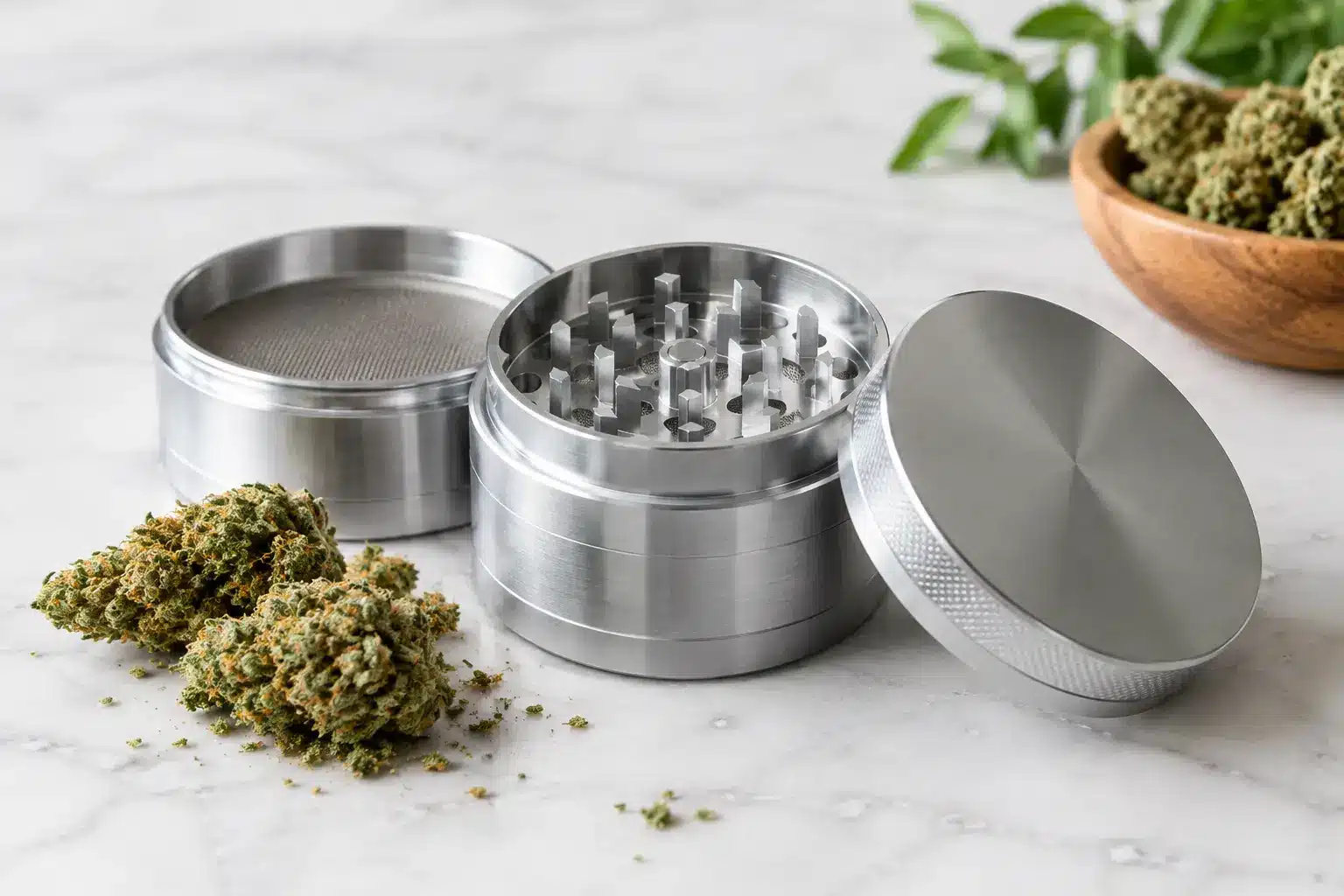
A grinder puts its teeth, chamber walls, and finish in direct contact with the herb you smoke. That is why “are aluminum grinders food safe” is a smarter question than simply asking whether a grinder looks good or feels heavy. The short answer: a well-made aluminum grinder can be a safe, dependable choice for dried herb preparation, but the alloy, finish, machining quality, and manufacturer’s production standards all matter.
Cheap grinders turn a straightforward tool into a question mark. Rough-cut teeth can shed residue, low-grade finishes can wear poorly, and unknown materials leave buyers guessing. A premium grinder should give you the opposite experience: clean performance, precise fitment, and confidence in what is touching your herb.
Are Aluminum Grinders Food Safe? The Real Answer
Aluminum is widely used in consumer products that contact food, from cookware to beverage cans. But “aluminum” is a broad category, not a complete material specification. Whether an aluminum grinder is appropriate for herb contact depends on the specific alloy, the way it is machined, whether it is anodized or coated, and how thoroughly it is cleaned before it reaches the customer.
For a dry-herb grinder, the concern is not cooking acidic food in a pot for hours. It is repeated mechanical contact: teeth breaking apart flower, threads or magnets holding the body together, and finely ground herb moving through the chambers. The material needs to resist corrosion, hold its shape, and avoid flaking or chipping under normal use.
That is where quality separates a serious CNC-machined grinder from a low-cost cast-metal accessory. Good material is only the starting point. Tight tolerances, clean machining, deburring, finishing, inspection, and final cleaning determine whether a grinder performs like a long-term tool or becomes another item in the junk drawer.
Why 6061-T6 Aluminum Is a Strong Grinder Material
6061-T6 aluminum is a high-quality aluminum alloy known for its strength, corrosion resistance, and excellent machinability. It is used across demanding applications because it can be precision-machined without sacrificing structural integrity. For grinders, those properties translate directly into a better ownership experience.
A properly machined 6061-T6 grinder can maintain sharp, consistent teeth and clean mating surfaces over years of regular use. The body is light enough to carry comfortably but substantially tougher than the thin, mystery-metal grinders common at gas stations and generic marketplaces. It also resists the rust issues associated with poorly made steel components.
No responsible manufacturer should treat an alloy name as a magic safety label. 6061-T6 contains aluminum along with small amounts of other elements that give it its performance characteristics. Still, its established use, corrosion resistance, and ability to accept a durable finish make it a smart material choice for premium herb grinders.
The alternative matters. Cheap grinders are often made from low-grade zinc alloys or cast materials. They may feel hefty at first, but weight is not proof of quality. Casting can produce inconsistent teeth, weak threads, porous surfaces, and finishes that break down faster than a precision-machined aluminum body.
Finish Quality Matters as Much as the Metal
Bare aluminum naturally develops a thin oxide layer when exposed to air. That layer helps protect the underlying metal. Many premium aluminum products also use anodizing, an electrochemical process that thickens and stabilizes the oxide surface for greater wear and corrosion resistance.
A quality anodized finish is part of the metal surface, not a layer of paint sitting on top. That distinction matters. Paint, low-quality plating, and unknown decorative coatings can chip under friction. A properly executed anodized finish is built for regular handling and provides a cleaner, more durable surface.
That does not mean every colored grinder is automatically better. Ask what the finish is, how it is applied, and whether the company controls its production. A manufacturer that can explain its material and process is giving you useful information. A seller that only says “premium metal” is asking you to take a blind guess.
Normal cosmetic wear can happen on any frequently used tool, especially around teeth and contact points. What should not be normal is visible flaking, peeling, powdery residue, or sharp damaged areas. If you see those signs, stop using the grinder and replace it.
Coatings and mystery materials deserve scrutiny
The biggest risk is rarely aluminum itself. It is the unknowns around it. A grinder with an unverified coating, questionable paint, or no clear material information gives you no way to evaluate what is contacting your flower.
Look for a company that identifies the alloy, explains the finish, and stands behind the product. Manufacturing accountability is not marketing fluff. It is the difference between a brand that owns its process and a reseller that has never inspected the factory floor.
Clean Machining Prevents a Dirty First Grind
Even a great alloy needs a disciplined production process. CNC machining uses cutting tools and lubricants to shape aluminum into teeth, chambers, and mating surfaces. After machining, the grinder must be properly deburred, cleaned, finished, assembled, and inspected.
Deburring is especially important. Precision teeth should be effective, not ragged. Sharp, clean tooth geometry breaks flower apart efficiently, while sloppy edges can create unnecessary metal burrs or snag material. The best grinder teeth are engineered to cut and shred consistently without turning delicate flower into dust.
A quality manufacturer should also remove machining oils, metal chips, and production residue before shipping. Buyers can still give a new grinder a quick wipe or rinse according to the maker’s care guidance before first use. That is basic good practice with any new accessory, not an admission that the product was made poorly.
Tahoe Grinder Co machines, finishes, assembles, inspects, and ships its grinders from its own US facility. That level of control matters because every stage affecting fit, finish, and cleanliness stays under one roof instead of disappearing into an anonymous supply chain.
What Food Safe Means for a Weed Grinder
“Food safe” is useful shorthand, but it can be misleading when applied to cannabis accessories. Dried herb is not the same as a food product, and a grinder is not a storage container or cooking surface. There is no single sticker that replaces material transparency and sound manufacturing.
For practical buying purposes, a food-safe-minded grinder should have a known, durable base material; a stable finish suited to regular contact; cleanly machined teeth and chambers; and no loose paint, plating, or unexplained residue. It should also be easy to clean without destroying the surface or leaving sticky buildup around the teeth.
Material safety and user maintenance work together. A premium grinder cannot stay clean if it is never cleaned, and a dirty grinder can affect flavor and performance regardless of what it is made from. Resin buildup causes sticking, makes threads harder to operate, and can interfere with an even grind.
How to Keep an Aluminum Grinder Clean and Safe
Start by emptying loose herb and brushing the teeth and chamber after use. A small, stiff brush works well for dry material. For sticky buildup, use the cleaning method recommended for your grinder’s finish. Avoid aggressive scraping with steel tools, which can scar anodized surfaces and damage tooth edges.
Do not assume a dishwasher is the right answer. Dishwasher detergents, heat, and extended moisture exposure can be harsh on finishes and can leave residue in tight areas. Hand cleaning gives you more control and lets you inspect every chamber, magnet seat, and screen.
If your grinder uses a kief screen, clean it gently. Screens are designed for fine separation, not brute force. Excessive scraping or bending can compromise the mesh and reduce performance. Replaceable components are useful, but careful upkeep is what keeps a premium grinder running smoothly.
Store the grinder dry after cleaning. For standard use, you do not need to obsess over it. Just treat it like the precision tool it is: keep it free of buildup, avoid damaging the finish, and inspect it if something feels rough or starts binding.
Red Flags When Buying an Aluminum Grinder
Price alone is not proof of a problem, but ultra-cheap grinders often cut corners somewhere. Be cautious when a seller cannot identify the metal, avoids describing the finish, uses only stock photos, or offers no warranty. You should also question grinders with painted teeth, rough thread engagement, loose magnets, uneven gaps between sections, or obvious metal dust in the package.
A strong grinder should open and close cleanly, align correctly, and produce a consistent texture with minimal effort. Thread-less magnetic designs can eliminate cross-threading altogether, while accurately machined multi-piece configurations give users more control over storage and kief collection. Those details are not cosmetic. They are evidence that the product was engineered for repeated use.
A lifetime warranty is another meaningful signal. It tells you the manufacturer expects the material and workmanship to hold up beyond the first few sessions. A company cannot credibly position a grinder as a long-term tool if it expects the teeth, finish, or closure system to fail under ordinary use.
The right question is not whether aluminum is inherently good or bad. Ask whether the grinder is made from a known alloy, finished correctly, machined cleanly, and backed by a company willing to stand behind every turn. Buy that level of confidence once, keep the grinder clean, and let your herb be the only thing getting ground.