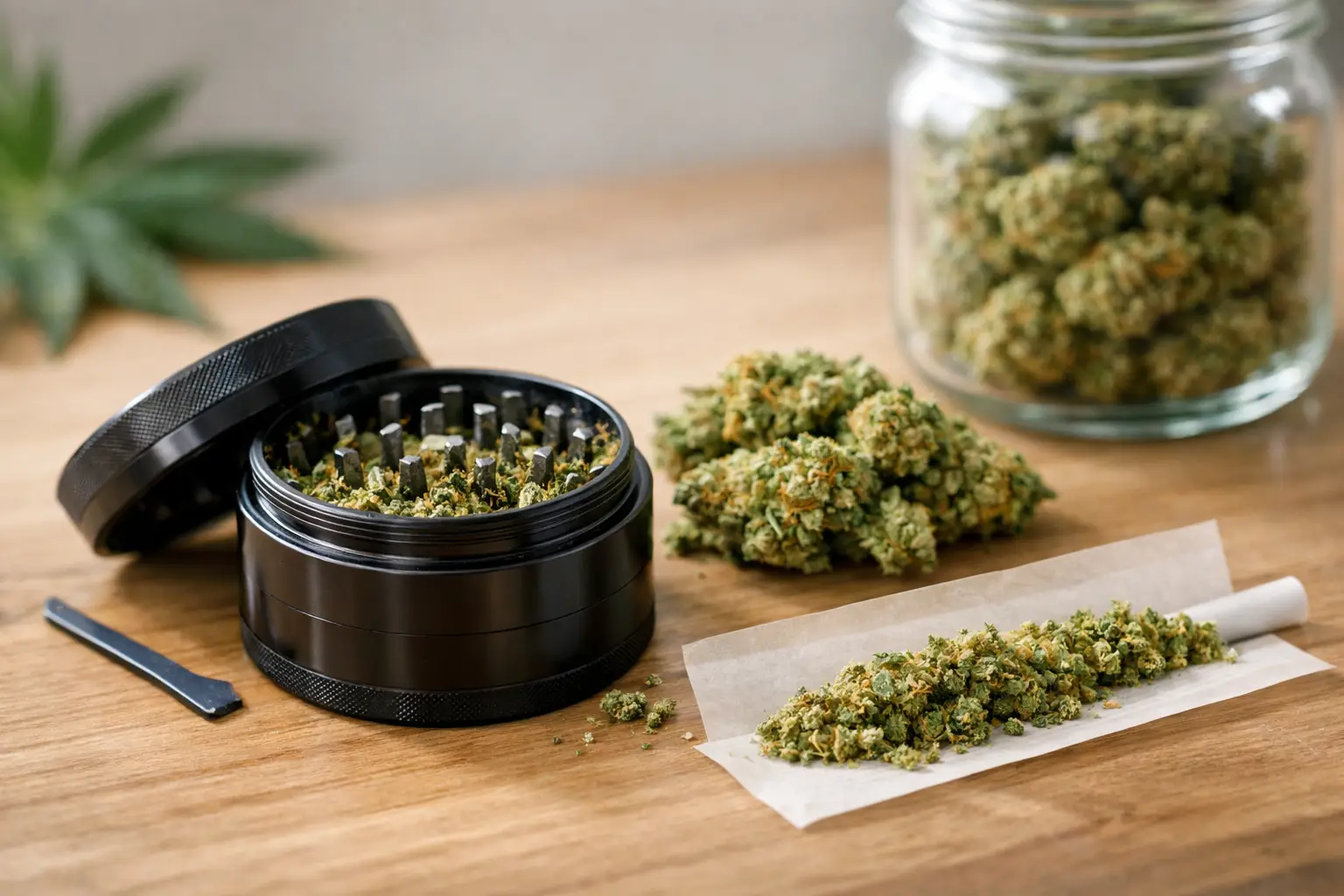
Break up a nug by hand and you can feel the problem immediately. One piece ends up too chunky, another turns to dust, and the bowl or joint burns exactly how that prep work looks – uneven, harsh, and wasteful. So does a grinder make weed better? In most real-world sessions, yes. Not because it changes the flower itself, but because it makes the flower perform the way it should.
That distinction matters. A grinder does not magically upgrade mids into top-shelf flower. It does not add potency or create terpenes that were never there. What it does is give good herb a better shot at burning evenly, packing correctly, and delivering a more consistent experience from the first hit to the last.
Does a grinder make weed better or just easier to use?
Both, if the grinder is actually well made.
The biggest improvement is consistency. When flower is ground to a more uniform texture, air moves through it more evenly. That means a bowl can cherry more predictably, a joint is less likely to canoe, and a vaporizer can heat the material with fewer hot spots. You are not changing the chemistry of the weed. You are improving the mechanics of how it gets used.
That is why cheap grinders disappoint so fast. If the teeth are dull, the tolerances are loose, or the chamber design smears and tears the flower instead of cutting it cleanly, the result is not much better than using your fingers. A precision grinder is a tool. A bad grinder is just a metal container that fights you.
Why grind size changes the smoking experience
Cannabis burns and vaporizes based on surface area. A whole nug burns slowly and unevenly because only part of it is exposed to heat and airflow. Ground flower exposes more surface area, which helps it ignite and stay lit with less effort.
But finer is not always better. If the grind is too fluffy and oversized, you get poor contact and uneven burn. If it is too powdery, airflow can get restricted, especially in a pipe or tightly rolled joint. That can make the smoke hotter, harsher, and more likely to clog.
The sweet spot is a consistent medium grind that gives you enough airflow while still packing densely enough to burn in a controlled way. That is the real answer behind the question, does a grinder make weed better. It makes the texture repeatable, and repeatable texture means repeatable performance.
For dry herb vaping, this becomes even more obvious. Vaporizers rely on controlled heat, not open flame. If the flower is uneven, some material gets overcooked while other pieces barely extract. A proper grinder helps the oven or chamber do its job with less waste and better flavor.
Flavor gets better when the grind gets cleaner
A lot of people think flavor is only about strain quality, but prep matters. Hand-torn flower usually includes compressed chunks and stringy pieces that do not heat at the same rate. That inconsistency can mute flavor because some parts are underused while others get scorched.
A grinder creates a more even particle size, which gives you a steadier burn or extraction. In practice, that usually means better terpene expression, especially in the early part of a session when the flavor is strongest.
There is also a cleanliness factor. Sticky, low-grade grinders can mash flower into their teeth and sidewalls. Instead of a clean cut, they crush and smear it. That extra friction and buildup makes every future grind worse. Sharper teeth, proper chamber spacing, and cleaner machining preserve texture better and keep the process from turning premium flower into a compressed mess.
The grinder quality question matters more than people think
If you are asking does a grinder make weed better, the honest follow-up is this: what kind of grinder?
Material matters. Thin, cheap metal grinders wear down, dent, and bind up. Plastic grinders work in a pinch, but they are not a serious long-term solution if you care about consistency. Precision-machined aluminum is the standard for a reason. It is strong, lightweight, corrosion-resistant, and stable enough to hold tight tolerances over years of use.
Design matters too. Tooth shape, tooth spacing, chamber depth, and lid fit all affect grind quality. So do threads – or the decision to avoid them. Poorly cut threads are one of the most common failure points on mass-market grinders. They cross-thread, seize, and collect residue. A magnetic thread-less design eliminates that friction point entirely and makes the grinder faster to use and easier to keep clean.
This is where premium manufacturing actually shows up in the session. Tight tolerances mean smoother rotation. Cleaner cutting means more uniform flower. Better fit means less wobble, less metal-on-metal slop, and fewer jams when sticky herb is involved.
Does a grinder make weed better for joints, bowls, and bongs?
Yes, but the benefit shows up a little differently depending on how you consume.
For joints, a grinder helps create an even roll with fewer dense pockets and fewer empty channels. That means a more stable burn line and less constant touching up with a lighter. If you have ever watched one side of a joint burn halfway down while the other side barely catches, you have already seen what inconsistent prep does.
For bowls and bongs, a grinder helps flower sit more evenly in the pack. You get better airflow and a more controlled cherry instead of a top layer that burns fast while larger chunks underneath stay green. It also makes cornering easier because the bowl surface is more uniform.
For vaporizers, the benefit is usually the most dramatic. Even extraction depends on even particle size. A quality grinder gives the device a fair chance to perform as designed.
When a grinder does not make weed better
There are limits.
If the flower is bone dry, old, or low quality, grinding it will not fix that. In fact, very dry weed can turn into powder too easily, which can make the experience harsher. In that case, a grinder still helps with consistency, but it cannot restore freshness.
If the grinder is dirty, dull, or poorly made, it can absolutely make things worse. Smearing sticky flower, producing uneven chunks, or shedding finish from cheap materials is not an upgrade. It is a downgrade with nicer branding.
There is also a preference factor. Some smokers like hand-breaking flower for certain pipes or slower-burning bowls because they want larger pieces. That is a valid choice. The point is not that every session must be ground the same way. The point is that when you want control, consistency, and repeatable results, a real grinder wins.
Choosing the right grinder setup
The best grinder depends on how you use your flower.
A 2-piece grinder is straightforward and fast. It is ideal for people who want a compact tool and do not care about storage chambers or pollen collection. A 3-piece design adds room for ground flower, which can make loading easier and keep the process cleaner. A 4-piece grinder adds a screen and lower chamber, giving you separation and collection if that matters to your setup.
Size matters as well. Smaller grinders are portable and discreet, but they hold less material and can feel cramped with denser buds. Larger grinders process more flower at once and usually give you more leverage, which is a real advantage with sticky herb.
For buyers who are done wasting money on throwaway accessories, this is where Tahoe Grinder Co stands apart – USA-made, CNC-machined 6061-T6 aluminum, tight tolerances, thread-less magnetic designs, and a lifetime warranty are not cosmetic details. They are the difference between a grinder that feels smooth for a month and one that still performs years later.
So, does a grinder make weed better?
Yes – if by better you mean easier to pack, more even to burn, more consistent to vape, and cleaner in flavor. The flower still sets the ceiling. A grinder just helps you reach it.
That is why serious smokers stop treating grinders like an afterthought. When the tool is engineered correctly, every session gets more predictable, less wasteful, and more enjoyable. Buy better flower when you can. But do not ignore the tool that decides how that flower actually performs once it leaves the jar.