
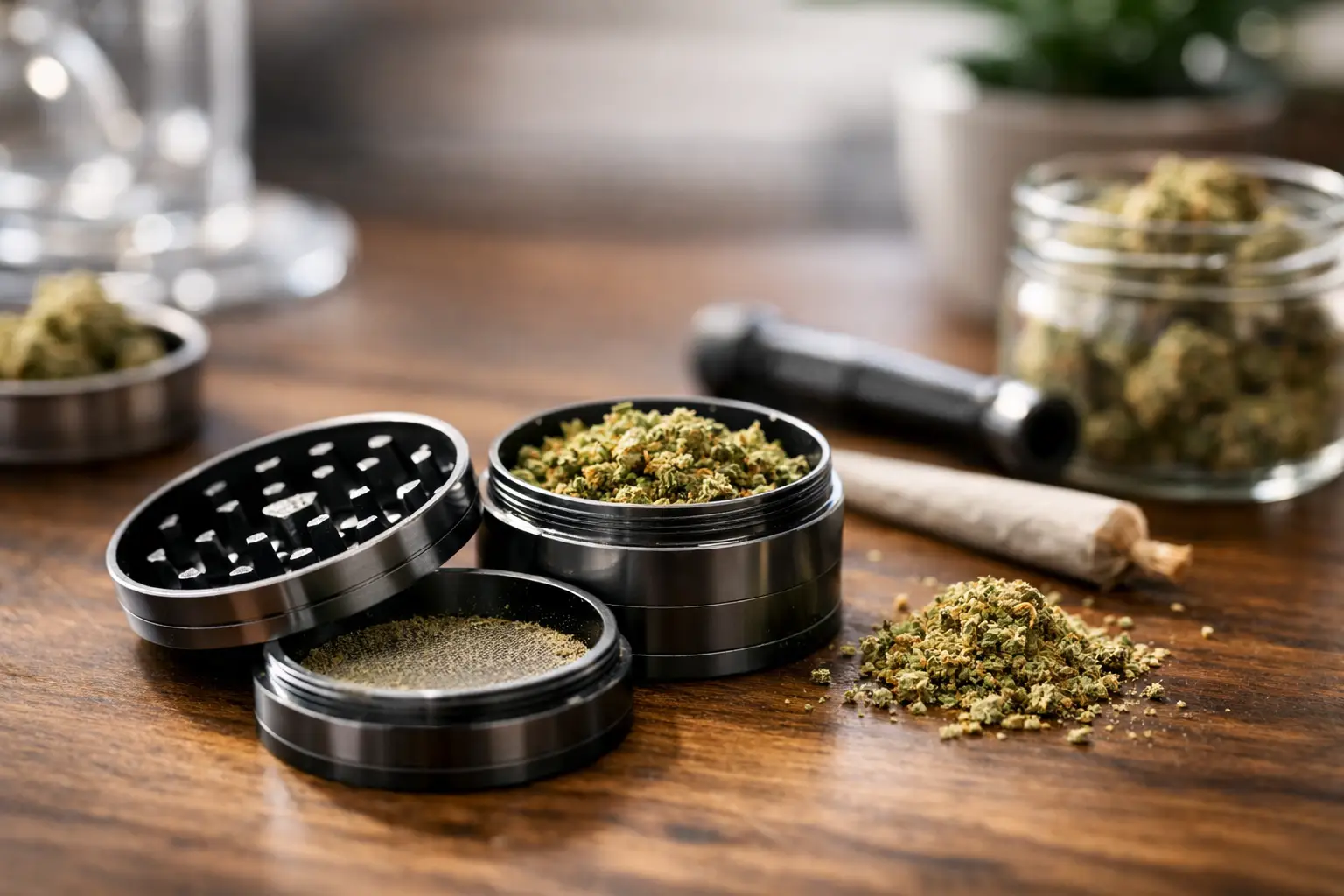
A bad grinder announces itself fast. It sticks when your hands are already busy, shreds flower into a dusty mess, drops metal flakes where they do not belong, or turns a simple prep step into a fight. That is exactly how quality grinders improve sessions – they remove friction before you even spark up.
For a lot of smokers, the grinder gets treated like a small accessory instead of what it really is: a performance tool. The texture of your flower affects airflow, burn rate, flavor, bowl packing, roll quality, and how much usable material you get from your stash. If the grind is inconsistent, the whole session feels less controlled. If the grinder is engineered correctly, everything gets easier.
How quality grinders improve sessions from the first turn
The biggest upgrade starts with consistency. A well-made grinder cuts herb into an even, usable texture instead of crushing some pieces into powder while leaving other chunks too large. That matters whether you are packing a bowl, rolling a joint, or loading a dry herb setup. Even material burns more predictably, pulls more smoothly, and wastes less flower in the process.
Cheap grinders tend to rely on loose tolerances and weak tooth design. On paper, they look similar. In use, they are not close. Poorly machined teeth tear at flower instead of cutting it cleanly, and that creates a grind that is all over the place. One side of your bowl can run hot while the other side barely catches. One part of your joint can canoe while the rest lags behind. Good grinders reduce those variables.
That is also why experienced consumers notice the difference immediately. Better machining does not just feel premium in the hand. It produces a grind that behaves better once flame hits it.
Better grind consistency means better airflow
Airflow is where grinder quality turns into session quality. Herb that is too fine can choke a bowl, clog a screen, and create harsh, overheated pulls. Herb that is too coarse can burn unevenly and force frequent relights. The sweet spot depends on how you smoke, but consistency is the part that always matters.
A quality grinder creates a more uniform particle size, which gives air a cleaner path through packed flower. That means less poking at the bowl, less constant adjustment, and a more even cherry. For joint smokers, it also means a roll that feels more balanced from end to end. If the material density changes every quarter inch, the burn will usually tell on you.
There is some personal preference here. Some smokers want a fluffier grind for bowls, while others want a slightly finer texture for rolling. That is why grinder size, tooth pattern, and chamber style all matter. But whatever your preference is, precision beats randomness every time.
Flavor suffers when your grinder is doing a bad job
Sessions are not only about getting the flower ready. They are about preserving what makes that flower worth smoking in the first place. When a grinder mashes material instead of cutting it cleanly, you can lose some of the structure that helps the herb stay fresh, aromatic, and easy to work with.
A cleaner grind supports a more even burn, and that usually translates into a better tasting session. You are not fighting hot spots as much. You are not pulling against compacted powder. You are not dealing with bits that barely burned mixed in with overcooked sections. Better texture supports better combustion, and better combustion usually gives flavor a fair shot.
Material choice matters here too. A grinder built from solid 6061-T6 aluminum with proper machining and finishing is simply a more serious tool than the lightweight alternatives that wear down fast. The point is not hype. The point is stability, durability, and repeatable performance over time.
The small details matter more than most buyers think
A lot of session problems start with details people ignore at checkout. Lid fit. Thread quality. Tooth alignment. Magnet strength. Chamber depth. Surface finish. Those are not cosmetic issues. They affect whether your grinder works smoothly on day one and whether it still works smoothly months later.
Poor threads are a common failure point. They cross-thread easily, collect residue, and turn a grinder into something you have to baby. Thread-less magnetic designs solve a lot of that frustration because there is less to bind up and less wear created by repeated opening and closing. If you use your grinder regularly, that difference adds up fast.
Tolerance control matters just as much. When parts are machined precisely, the grinder feels clean and deliberate instead of sloppy. The teeth engage properly. The chambers line up the way they should. The lid seats securely. That level of control is what separates a grinder that feels dependable from one that feels disposable.
How quality grinders improve sessions by reducing waste
Wasted flower usually does not look dramatic. It shows up as herb stuck in bad teeth, material packed into corners, uneven chunks you have to regrind, or overshredded dust that burns too fast. A cheap grinder can quietly cost you more over time because it handles your material poorly.
A quality grinder makes better use of what you put into it. The teeth cut efficiently, the chamber clears more cleanly, and the finished grind is easier to transfer without making a mess. If you smoke regularly, that efficiency becomes noticeable. Less cleanup. Less loss. Less frustration every single time you prep.
This is especially true with stickier flower. Lower-end grinders tend to jam when resin builds up, and once that starts, performance falls off quickly. Better materials and tighter machining help maintain smoother operation even as your grinder sees real use. No grinder is maintenance-free forever, but quality buys you far more usable time between cleanings.
The right grinder setup depends on how you smoke
Not every session calls for the same grinder format, and pretending otherwise is lazy advice. A 2-piece grinder is simple, direct, and ideal for users who want speed with minimal parts. A 3-piece gives you added capacity and separation. A 4-piece adds more control for consumers who want compartmentalized function and a more built-out prep tool.
Size matters too. A compact grinder is easy to carry and great for lighter use or travel setups. A larger grinder, especially in an oversized format, makes more sense for people who prep more flower at once or want more leverage and faster throughput. Bigger is not automatically better, but undersizing your grinder can make every session more tedious than it needs to be.
This is where serious manufacturing stands out. When a company actually machines its own grinders, controls finishing, inspects the parts, and ships directly, you get a better shot at buying a tool that matches your routine instead of gambling on generic inventory. Tahoe Grinder Co built its reputation on exactly that kind of control.
Cheap grinders do not fail all at once
Most low-end grinders do not become useless overnight. They decline. First they feel rough. Then the lid stops seating as cleanly. Then the teeth seem less effective. Then grinding sticky flower becomes a chore. Then you notice wear, residue buildup, and performance inconsistency that was not there when it was new.
That slow decline affects sessions because you start adjusting around the tool. You grind less at once. You press harder. You accept a worse texture. You clean more often than you should have to. You work around a bad accessory instead of relying on a good one.
A premium grinder costs more upfront, and that is the trade-off. But if the tool is built to hold tolerance, resist wear, and keep performing over the long haul, the value picture changes. For frequent smokers, reliability is not a luxury feature. It is the feature.
The ownership experience matters too
Session quality does not start and end with the grind itself. It also includes whether the grinder arrives fast, feels right in hand, and holds up with repeated use. Buyers who are tired of random third-party products are usually looking for more than aesthetics. They want confidence that the grinder was designed with intention and built to last.
That is where lifetime warranty coverage, direct fulfillment, and in-house manufacturing matter. They signal that the grinder is not being treated like a throwaway add-on. It is being positioned as a long-term tool. For quality-conscious cannabis consumers, that changes the buying decision from cheap replacement math to actual ownership value.
The best sessions feel easy. The flower is prepared correctly, the airflow stays open, the burn is even, and the whole setup works without asking for extra attention. A quality grinder will not make mediocre flower magical, but it will let good flower perform the way it should – and that is exactly why the right tool earns its place on the tray.