
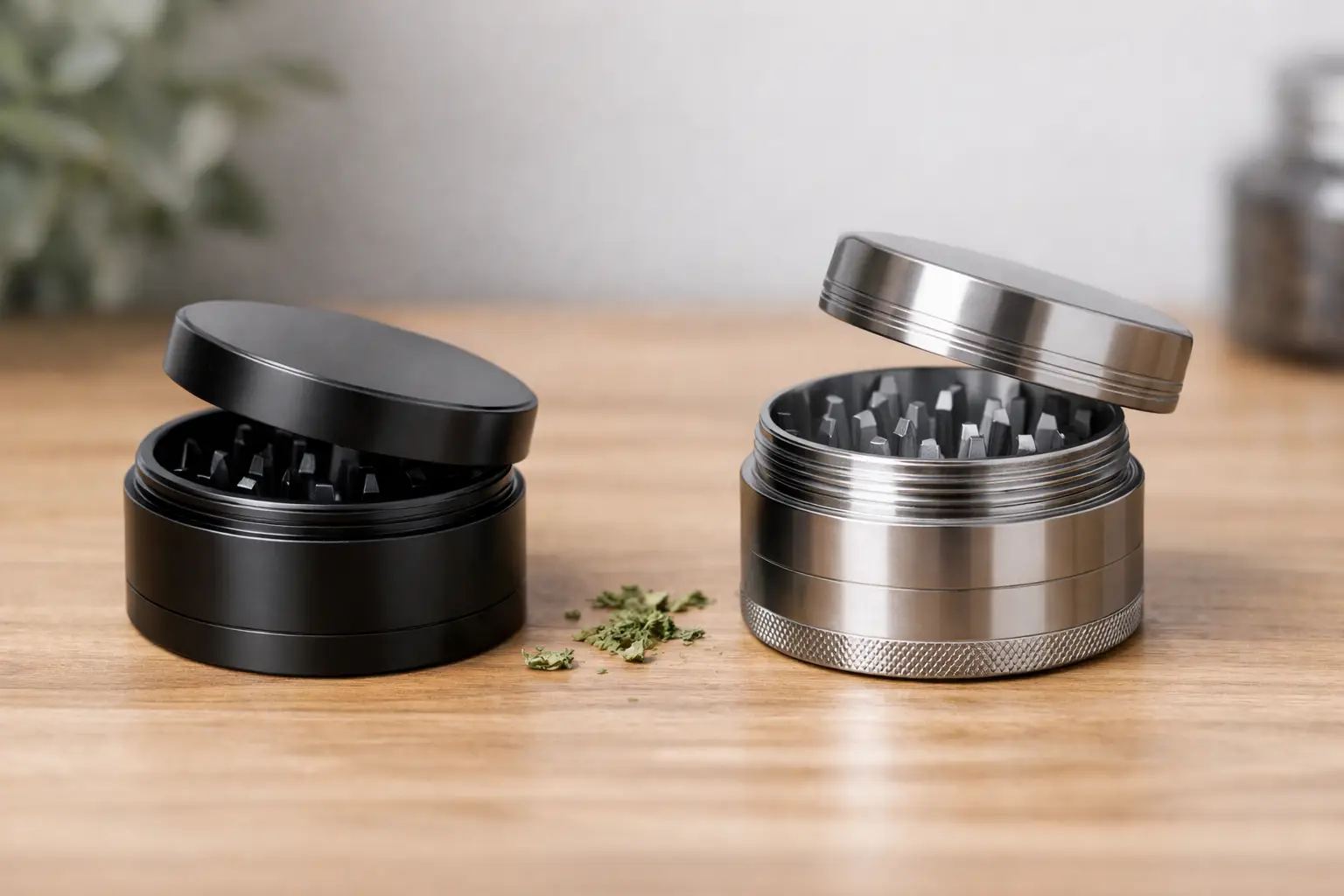
A grinder tells you what kind of smoking experience you’re about to have before you even pack a bowl. In the magnetic lid vs threaded grinder debate, the real difference is not cosmetic. It shows up in how fast the grinder opens, how clean it stays, how often it binds up, and whether it still feels good after months or years of use.
Cheap grinders make this decision look minor. It is not. Lid design changes the way the whole tool behaves under pressure, especially when you are grinding sticky flower, opening the grinder repeatedly, or carrying it in a pocket or bag. If you want a grinder that feels like a precision tool instead of a disposable accessory, this is where you should pay attention.
Magnetic lid vs threaded grinder: what actually changes?
At a basic level, a threaded grinder uses screw-on sections. You rotate the lid to open and close it, and the threads create the mechanical connection. A magnetic grinder uses a threadless top held in place by magnets, so the lid lifts off and snaps back into place without twisting.
That sounds simple, but the user experience is completely different. Threaded grinders depend on clean, well-cut threads and consistent alignment. Magnetic lid designs depend on magnet strength, tight tolerances, and accurate machining in the body itself. One system asks you to twist every time. The other removes that step entirely.
For people who grind often, that difference adds up fast. A magnetic lid is quicker, cleaner, and less annoying in daily use. A threaded grinder can still work well, especially if it is machined properly, but it gives you another failure point and another surface that can collect residue.
Why threaded grinders frustrate people over time
Threaded grinders have been around forever, so a lot of smokers assume they are the default for a reason. In reality, they became common because they are familiar and easy to mass produce, not because they are the best-performing design.
Threads attract buildup. Fine plant material, kief, and sticky resin settle into the grooves, and once that happens the grinder can start feeling gritty or resistant. If the machining is sloppy, cross-threading becomes a risk. If the material is soft or coated poorly, thread wear shows up even faster.
This is where cheap grinders really fall apart. Loose tolerances make the lid wobble, bind, or catch. You end up forcing the top closed or backing it off and trying again. That is not just irritating. It slows down use and makes the grinder feel cheap every single time you touch it.
Even on a decent threaded grinder, opening and closing takes more effort than it should. Twist to open. Twist to close. Twist again if the threads do not catch cleanly. It is a small action, but repeated friction is still friction. If you use your grinder daily, convenience matters.
Where magnetic lid grinders pull ahead
A good magnetic grinder removes the least enjoyable part of the process. No screwing the top on. No checking thread alignment. No caked-up grooves turning a basic task into maintenance.
You lift the lid, load the flower, grind, and set the lid back down. That directness is the point. It feels faster because it is faster. It also feels cleaner because the lid interface is simpler and easier to wipe down.
The best magnetic designs are not just convenient. They are mechanically smarter for everyday use. Instead of relying on thread engagement, they rely on strong magnetic retention and precise fitment. When the grinder body is machined correctly, the lid seats securely without the extra wear surfaces that threads create.
That is a major reason premium manufacturers moved toward threadless magnetic tops. When the tolerances are tight and the magnets are strong, you get a cleaner operating experience with fewer opportunities for jam-ups.
Performance matters more than novelty
Some buyers hear “magnetic lid” and assume it is a gimmick. That usually comes from experience with low-end grinders that use weak magnets and loose construction. A bad magnetic grinder is bad for obvious reasons. The lid may shift, rattle, or pop off too easily.
But that is not a flaw in the concept. It is a flaw in execution.
A properly built magnetic grinder should feel deliberate and secure. The lid should snap into place with confidence and stay put during normal handling. It should open instantly when you want access and stay closed when you do not. That balance comes from engineering, not marketing.
The same standard applies to threaded grinders. Good threads can feel smooth. Bad threads feel like sandpaper with attitude. Neither design gets a free pass just because it exists. Machining quality decides whether the grinder performs like a serious tool or a forgettable accessory.
Magnetic lid vs threaded grinder for sticky flower
This is where the trade-off becomes real.
Sticky herb is the fastest way to expose weaknesses in grinder design. Resin builds up on teeth, around the lid, and along any area where plant material gets compressed. On a threaded grinder, that means the threads can start collecting exactly the kind of residue that interferes with smooth opening and closing.
On a magnetic lid grinder, there are simply fewer places for that problem to develop. You still need to keep the grinder clean, especially if you run dense, fresh, or tacky flower through it regularly. But you are not fighting packed residue inside spiraled grooves every time you open the top.
For heavy users, that difference is practical, not theoretical. Less buildup in critical contact areas means less resistance, less frustration, and less cleaning effort just to keep the grinder operating normally.
Security and portability are not identical
Threaded fans usually make one fair point: screw-on lids can feel more mechanically locked, especially when you are tossing a grinder into a backpack, glove box, or travel kit. If containment is your only priority, threads can offer peace of mind.
But secure does not always mean better in real use. A well-built magnetic lid grinder can be very stable in transit, particularly when the magnets are strong and the body fit is precise. For most everyday carrying, that is more than enough.
The real question is how you use your grinder. If you want maximum twist-lock reassurance for rough transport, a threaded lid may still appeal to you. If you want speed, cleaner operation, and fewer maintenance headaches, magnetic usually wins.
That is the pattern with almost every grinder comparison. It is not about which design is universally perfect. It is about which one solves the problems you actually have.
The material and machining matter more than people think
A magnetic lid on a poorly machined grinder is still a poorly machined grinder. The same goes for threads. That is why buyers who care about performance should look past surface features and pay attention to manufacturing quality.
A serious grinder should be made from durable aluminum, cut with tight tolerances, and finished consistently across every section. The teeth should shred evenly without mashing the flower. The body should feel rigid and balanced in the hand. The lid should fit like it belongs there, not like it was borrowed from another unit.
This is where USA-based in-house machining stands apart from generic import inventory. When a manufacturer controls design, machining, finishing, inspection, and fulfillment, you get more consistency and fewer surprises. That matters whether the grinder uses a magnetic lid or threads, but it matters even more when the brand is promising premium performance.
Tahoe Grinder Co built its reputation on that exact difference. A threadless magnetic design only works at a high level when the machining is right, and that is where serious production standards separate real grinders from cheap lookalikes.
So which one should you buy?
If you want the blunt answer, most serious herb smokers will be happier with a magnetic lid grinder.
It is faster to use, easier to keep clean, and less likely to become annoying over time. For daily grinding, that matters more than tradition. A grinder should disappear into your routine and do its job without resistance. Magnetic lids are better at that when they are paired with quality materials and precision machining.
Threaded grinders still have a place. If you prefer the feel of a screw-on closure or want that extra sense of locked-in security during transport, a well-made threaded grinder can absolutely work. But if you are choosing based on convenience, cleanliness, and long-term user experience, the magnetic design has the stronger case.
Buy the design that solves the problems you are tired of dealing with. If you are done fighting sticky threads, uneven fitment, and cheap grinder habits, a premium magnetic grinder starts making sense the second you use it.