
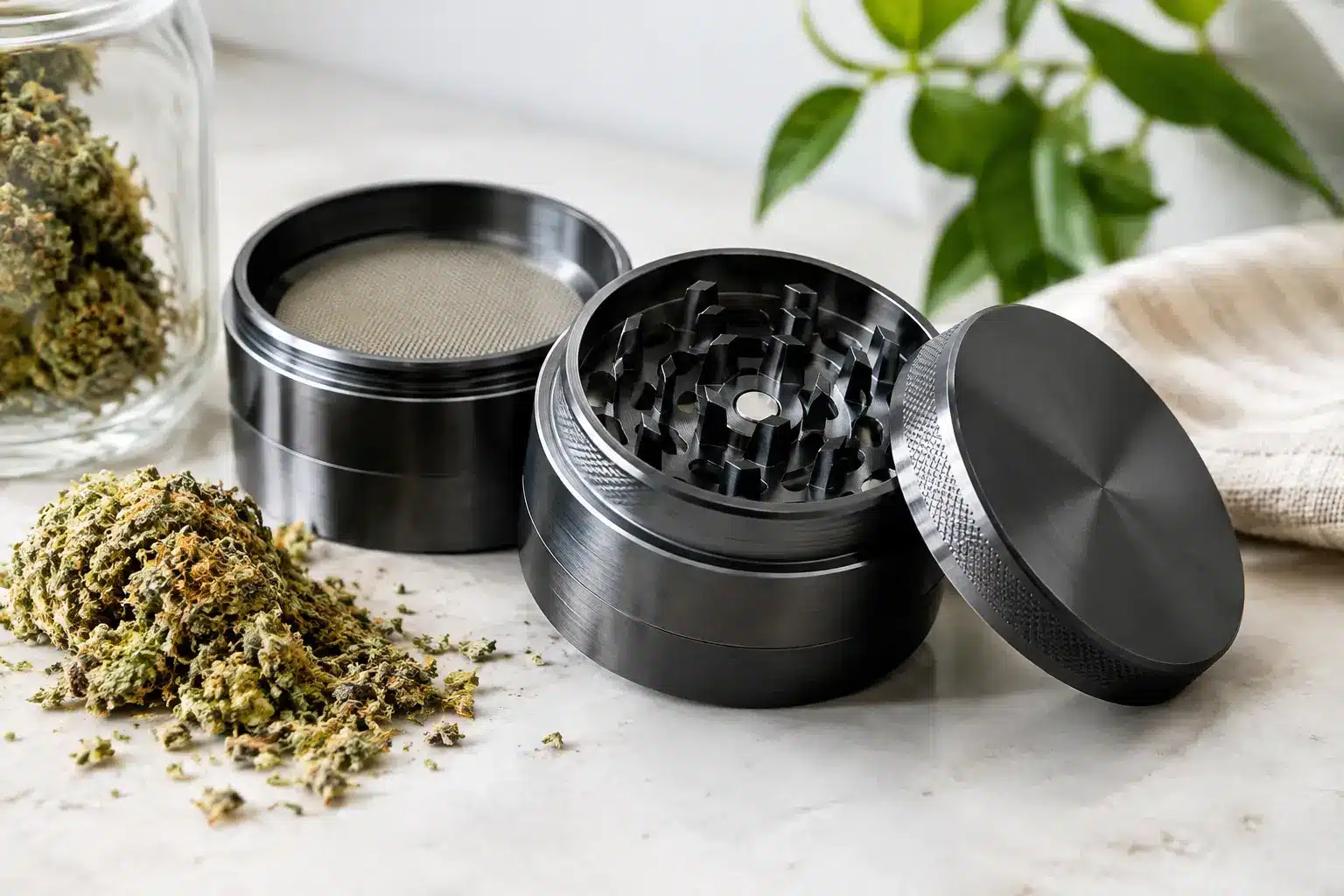
A grinder should not be the weak link between good flower and a good session. Yet plenty of metal grinders look convincing online, then bind at the threads, dull at the teeth, shed finish, or leave herb in uneven chunks. The difference is not cosmetic. It comes down to material, machining, design, and whether the tool was built for repeated use rather than a quick sale.
For adult cannabis consumers, a well-made grinder creates a more consistent texture, makes rolling and packing easier, and helps flower burn more evenly. That does not mean every smoker needs the largest or most complex model. It means choosing a grinder whose construction matches how you actually prepare herb.
What Separates Premium Metal Grinders From Cheap Ones
The word “metal” alone tells you almost nothing. Low-cost grinders are often made from soft, low-grade alloys or zinc-based pot metal. They may feel heavy in the hand, but weight is not engineering. Those materials can wear faster at the teeth, develop rough threads, and lose their finish after regular use.
A serious grinder starts with the right aluminum. 6061-T6 aluminum is a high-strength alloy used where durability and precision matter. It is light enough for daily carry, strong enough to handle repeated torque, and ideal for CNC machining. When the body, teeth, and mating surfaces are machined accurately, the grinder opens smoothly, closes confidently, and keeps its feel over time.
Machining tolerances matter just as much as the material itself. A grinder has moving surfaces that need to work together: the lid, cutting plate, chamber walls, and any threaded sections. Loose tolerances create wobble. Poorly cut threads catch and cross-thread. Inconsistent tooth geometry leaves flower crushed in some spots and untouched in others. Precision machining is what turns aluminum into a tool worth keeping.
Tahoe Grinder Co machines, finishes, assembles, inspects, and ships its grinders from its own US facility. That level of production control is not a buzzword. It is how a manufacturer can stand behind fit, finish, and long-term performance with a lifetime warranty.
The Right Grinder Design Depends on Your Routine
The best grinder configuration depends on what you want from the process. A simpler grinder is faster and easier to clean. A multi-chamber grinder offers more separation and storage. Neither is automatically better. The right choice is the one that removes friction from your normal routine.
2-piece grinders: direct, fast, and portable
A 2-piece grinder is all cutting surface. You load flower, twist, and open it back up when the grind reaches the texture you want. There is no separate chamber, screen, or extra hardware to manage.
This style is ideal for people who prefer to grind directly over a rolling tray, bowl, or other surface. It is also a strong choice for travel because it has fewer parts and a lower profile. The trade-off is obvious: you need to transfer the ground herb yourself, and you do not get storage below the cutting teeth.
3-piece grinders: a practical daily driver
A 3-piece grinder adds a storage chamber beneath the teeth. Ground flower falls through the cutting plate and collects below, keeping the top section cleaner and making it easier to prepare more than one session at a time.
For many smokers, this is the sweet spot. You get separation between unground flower and prepared herb without adding a screen or an additional chamber. If you value a straightforward workflow but want more capacity than a 2-piece model provides, a 3-piece design is hard to beat.
4-piece grinders: separation and collection
A 4-piece grinder includes a screen that separates fine material from the ground flower, allowing it to collect in a lower chamber. For people who like this added organization, it is a useful design. It also gives you more room to keep prepared herb contained between sessions.
The trade-off is maintenance. Screens need occasional cleaning to maintain airflow, and more components mean more surfaces to inspect. A 4-piece model makes sense when the collection feature is something you will genuinely use, not simply because it has more parts.
Tooth Shape Controls the Grind
Grinder teeth are not decoration. Their geometry determines how flower is cut, pulled, and distributed through the chamber. Sharp, properly spaced teeth create a controlled cutting action that breaks apart herb without turning every load into dust.
Too few teeth can leave large, awkward pieces. Teeth packed too tightly can overwork the herb or make the grinder harder to turn when it is loaded. The goal is an even, fluffy result that packs consistently and promotes an even burn.
Grinding technique matters, too. Do not force a grinder when the chamber is overloaded. Break down dense buds if needed, load the outer edge instead of stacking everything in the center, and use steady rotations rather than aggressive torque. Even a premium grinder performs best when it is not being treated like a vise.
Size Is More Than a Style Choice
Grinder diameter affects grip, capacity, and leverage. Compact grinders are easy to pocket and work well for individual sessions. Their smaller cutting area naturally means smaller loads, which can be exactly what a casual user wants.
Larger grinders give you more surface area and more leverage. A 90mm model is built for people who prepare larger amounts at once, share sessions, or simply want a substantial tool that is easy to grip. The wider body also gives the teeth more room to process flower without crowding the chamber.
Bigger is not always better. An oversized grinder is less convenient in a pocket and can be unnecessary if you only grind small amounts. Choose the size that fits your hands, your storage space, and the amount of herb you realistically prepare at one time.
Why Thread-less Magnetic Lids Make Sense
Traditional threaded lids can work well when they are machined correctly, but they are also one of the most common failure points on cheap grinders. Misaligned threads, debris, and soft metal can turn a simple open-and-close action into a daily annoyance.
A thread-less magnetic lid removes that issue from the top section. Strong magnets keep the lid secure while making access quick and natural. There is no need to line up threads before closing, and no risk of the lid binding after sticky residue builds up around the edge.
This is not about adding a gimmick. It is about eliminating a point of friction from a tool you use repeatedly. The best product design often feels obvious because it works without demanding attention.
Keep Your Grinder Performing Like It Should
Even the best aluminum grinder needs basic care. Empty it regularly instead of allowing ground flower to compact in corners. A soft brush is usually enough for routine cleanup. If residue begins to affect movement, disassemble the grinder and clean each component carefully with an appropriate method for the material and finish.
Avoid scraping interior surfaces with sharp metal tools. The goal is to remove buildup, not damage the finish or score the screen. Let the grinder dry completely before using it again, especially after a deeper cleaning.
Also resist the urge to buy based on novelty alone. Bright coatings, oversized logos, and complicated shapes do not compensate for poor tolerances or weak materials. A grinder should feel balanced, turn smoothly, cut consistently, and hold up when used often.
The right grinder becomes part of the ritual because it disappears into it. Choose metal that is made to last, machining that feels precise from the first twist, and a design that fits your actual sessions. Then put it to work.