
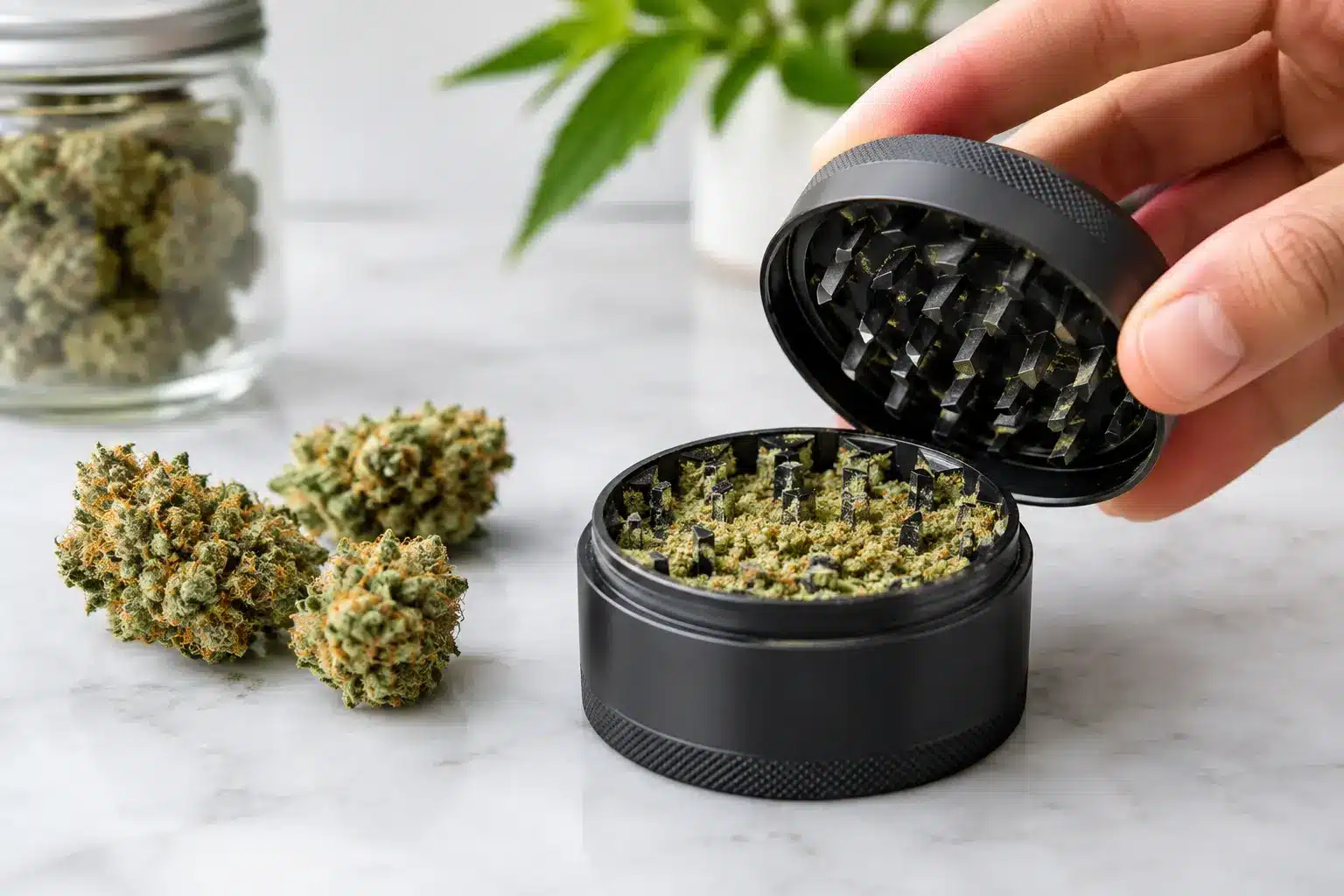
A sticky flower grinding example usually starts the same way: you load a dense, resin-heavy nug into a basic grinder, give it a hard twist, and immediately feel the teeth bind. The top refuses to turn, the flower compresses into the chamber, and what should have been a clean prep step becomes a sticky, frustrating fight. That is not just a flower problem. It is a tool-and-technique problem.
Fresh, terpene-rich cannabis is supposed to have some tack. The goal is not to dry it out until it turns to dust. The goal is to use a grinder with enough cutting authority, chamber space, and machining precision to process sticky material without crushing it into a dense wad.
A Sticky Flower Grinding Example, Step by Step
Picture a dense, frosty flower with visible resin on the calyxes and a slight spring when pressed. It is not wet, but it is fresh enough that your fingers pick up a little tack after breaking it apart. This is exactly the type of flower that exposes weak grinder design.
Start by separating the nug into smaller pieces with your fingers. Remove the thick central stem and place the pieces around the outer edge of the grinding chamber, where the teeth can engage them cleanly. Do not pack one oversized nug into the center and force the lid shut. That turns the flower into a compressed plug before the teeth have a chance to cut it.
Close the grinder and use controlled, partial rotations rather than trying to power through with one aggressive twist. Turn forward, ease back slightly, then continue. This lets the teeth slice through sticky plant material in stages instead of mashing it flat. With a well-made grinder, resistance should decrease as the flower breaks down and drops through the holes.
After several rotations, give the grinder a light tap against your palm. This helps loosen ground material sitting near the teeth and keeps it moving into the lower chamber. Open it only when the lid turns freely. If you keep rotating after the flower is already processed, you can overwork the material and create a finer texture than your smoking method calls for.
The result should be fluffy, consistent cannabis that loads evenly and burns predictably. It should not be powdery, wet-looking, or packed into dense clumps.
Why Sticky Flower Jams Cheap Grinders
Sticky flower does not automatically mean the grinder is failing. But poor grinder construction makes normal resinous flower far harder to process than it needs to be.
Low-grade grinders often rely on shallow teeth, rough interiors, loose tolerances, and poorly cut threads. Their teeth press and tear instead of making a decisive cut. Their chambers can flex under pressure. Their lids can bind when a small amount of resin builds near the edge. Add an oversized nug, and the grinder starts acting like a clamp instead of a cutting tool.
Precision matters because the moving surfaces must stay aligned while the teeth work. A CNC-machined aluminum grinder with sharp, properly spaced teeth is built to create a repeatable cutting action. The flower meets the teeth, breaks apart, and moves through the chamber. It is a simple mechanical job, but it demands more than a novelty-shop grinder can deliver.
Material matters too. A serious 6061-T6 aluminum grinder brings the strength needed for daily use without the brittle feel of cheap cast metal or the weak teeth found in many plastic options. When the body, teeth, and closure are engineered as a complete system, sticky flower becomes manageable rather than a reason to reach for scissors.
Load Less, Not Harder
The most common mistake with sticky cannabis is overloading the grinder. A full chamber may look efficient, but dense resinous flower needs room to move. When every tooth is buried under compressed bud, there is nowhere for material to shift as it is cut.
For especially sticky flower, load roughly half to two-thirds of the grinding chamber. Break down larger buds first, remove thick stems, and leave enough open space for the pieces to circulate. You may need two passes for a larger session. That is still faster than stopping to pry apart a jammed grinder or scrape compressed flower off the teeth.
There is also a difference between a hard nug and a damp nug. A firm, sticky flower with a normal cure can be ground effectively with the right technique. Flower that feels genuinely wet, gummy throughout, or impossible to break apart may not be cured properly. No grinder can fully compensate for material that has not been dried and cured to a usable condition.
Choose the Grind for How You Use It
Sticky flower needs a consistent grind, but the right texture depends on your setup. A medium, fluffy grind is a strong all-around choice for most dry herb use. It allows airflow without letting large chunks create uneven burning.
If you prefer a pipe or small bowl, a slightly coarser grind can prevent the material from pulling through too quickly. For a hand-rolled session, aim for an even texture that distributes from end to end without turning into dust. A very fine grind can restrict airflow, burn too hot, or make sticky flower feel harsher than it needs to.
This is where grinder configuration earns its place. A 2-piece grinder is direct and fast when you want to grind and use the flower immediately. A 3-piece design adds a storage chamber below the teeth. A 4-piece grinder adds a screen and lower collection chamber, separating finer material over time.
None is automatically best in every situation. The right choice depends on whether you prioritize speed, portability, storage, or separation. What should not be negotiable is the quality of the cutting chamber itself. If the teeth cannot process sticky flower cleanly, extra chambers will not solve the real problem.
Keep Resin From Becoming a Mechanical Problem
Resin buildup is normal. Ignoring it is optional. The thin layer of tack that forms around teeth, the rim, and the closure gradually reduces clearance. Eventually, even a premium grinder will feel less smooth if it is never maintained.
Start with simple habits. After grinding sticky flower, tap out loose material before putting the grinder away. Use a small dry brush to clear the teeth and screen area when needed. Do not leave ground flower packed inside for long periods, especially if the grinder is going into a pocket, bag, or warm car.
When buildup becomes noticeable, disassemble the grinder and clean each component according to the manufacturer’s care guidance. Make sure all parts are completely dry before reassembly and before loading fresh flower. The objective is not cosmetic perfection. It is keeping the cutting surfaces, holes, and closure functioning as designed.
Avoid attacking a stuck lid with tools that can gouge aluminum or bend parts. Likewise, do not use excessive force as your first response. If the grinder suddenly feels seized, empty it, inspect the rim for trapped material, and clean the contact areas. A grinder that is engineered for longevity deserves maintenance that protects its fit and finish.
What a Premium Grinder Changes
A quality grinder does not make sticky flower less resinous. It gives that resin a controlled path through a tool designed to handle it. Sharp teeth start the cut. Proper chamber depth gives the flower room to move. Accurate mating surfaces keep operation smooth. Durable aluminum holds its form over years of use.
That difference is easy to feel. Instead of twisting harder and hoping for the best, you get predictable resistance, a more even grind, and less material wasted in a clogged chamber. It also means less interruption when you are preparing flower for a session.
Tahoe Grinder Co builds its grinders in-house in the USA, using CNC-machined 6061-T6 aluminum, tight tolerances, and thread-less magnetic designs made for real daily use. That manufacturing control matters when the flower is sticky, the session is waiting, and a cheap grinder would rather jam than work.
Treat sticky flower as a test of your preparation setup. Use manageable loads, give the teeth room to cut, stop grinding once the texture is right, and keep the chamber clean. When the grinder is built to perform, fresh, resin-rich flower becomes exactly what it should be: a better smoke, not a bigger chore.