
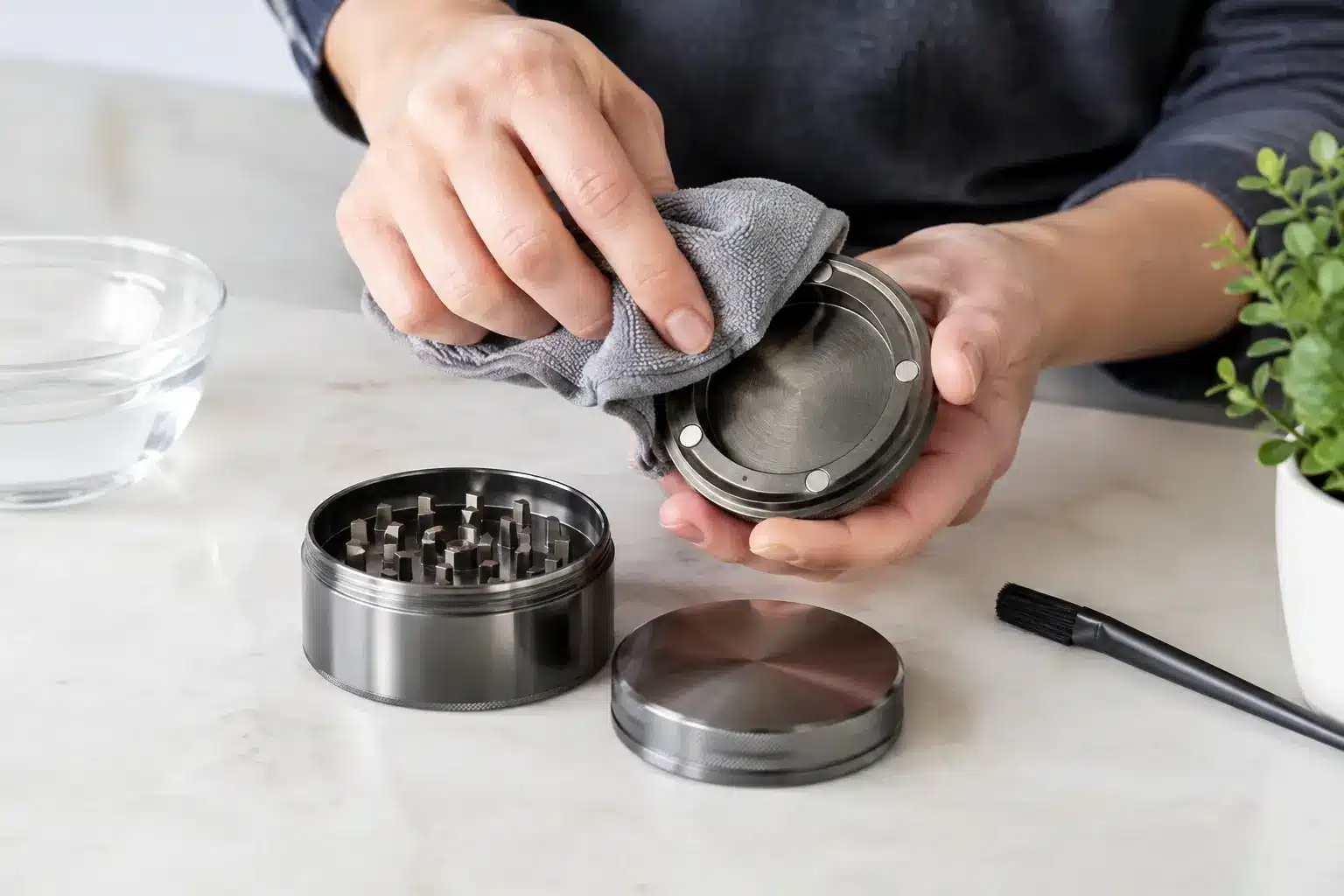
A magnetic grinder lid should land with a clean, confident snap. When it starts feeling loose, gritty, or hard to seat, the problem usually is not the magnet itself. It is resin, fine herb dust, or careless cleaning getting between two precision-machined surfaces. Knowing how to maintain magnetic grinder lids protects one of the best features of a thread-less grinder: fast access without worn-out threads, cross-threading, or a cap that fights you every session.
A quality magnetic lid is simple by design, but it is not disposable. Treat it like the working part it is, and it will keep closing securely while your grinder stays clean, efficient, and ready to perform.
Why Magnetic Grinder Lids Need Basic Care
Thread-less magnetic lids eliminate a common grinder failure point. Cheap threaded grinders can bind with resin, collect debris in the grooves, and eventually wear down. A properly fitted magnetic lid avoids that entire process. It opens quickly, closes cleanly, and keeps the grinding chamber covered without asking you to twist the cap into place.
That convenience depends on clean contact surfaces. The lid and grinder body are machined to fit closely, leaving very little room for sticky buildup. Fine plant material can collect around the inner rim, while concentrated resin can make the lid feel slow or uneven as it comes down. A lid may still close, but it will not feel like the precision component it is supposed to be.
There is also a practical reason to stay ahead of buildup. A dirty rim can hold the lid slightly above its intended position. That weakens the feel of the magnetic closure and creates a gap where more debris can settle. The fix is easy when handled early. Ignore it for months, and every cleaning takes longer than it should.
The Right Way to Maintain Magnetic Grinder Lids
The best maintenance routine is short and consistent. You do not need to scrub a premium aluminum grinder after every use, but you should remove visible material before it turns into a hardened ring of resin.
Start by emptying the grinder completely. Tap out loose herb and use a soft, dry brush to clear the underside of the lid, the upper teeth, and the rim where the lid meets the body. A clean, unused toothbrush or small detail brush works well. The goal is not to polish the metal every time. It is to keep loose material from getting compressed into the mating surfaces.
Next, wipe the rim with a dry microfiber cloth or cotton swab. Pay attention to the inside edge of the lid and the top edge of the grinder’s lower section. These are the surfaces that determine whether the lid seats flat. If you see sticky residue, use a cotton swab lightly dampened with isopropyl alcohol. Keep the alcohol on the swab rather than pouring it into the grinder.
Let every part air-dry fully before reassembling. Alcohol evaporates quickly, but moisture and trapped residue do not belong in your herb grinder. Once dry, set the lid on top without forcing it. A clean magnetic lid should center itself and pull into place with a firm, even feel.
Clean the Rim Before the Magnet Becomes the Suspect
Many people assume weak closure means a weak magnet. In most cases, the magnet is doing exactly what it should. The actual issue is a dirty sealing area that prevents the lid from sitting flush.
If the lid rocks slightly, sits crooked, or needs to be pressed down harder than usual, inspect the rim first. Check for packed flower, a strand of sticky herb, or a small chunk lodged near the edge. Even a thin layer of buildup can change the fit enough to make a premium grinder feel sloppy.
Use a wooden toothpick carefully if a dry brush cannot reach a tight patch. Do not use a knife, metal pick, or screwdriver. Sharp steel tools can scratch anodized aluminum and leave marks on precision-machined surfaces. Those scratches give resin and debris more places to hold on over time.
Use Solvents Sparingly and Intentionally
Isopropyl alcohol is useful for stubborn resin, but more is not better. A light wipe is normally enough for the lid rim and the top edge of the grinder. Avoid soaking components unless you are performing a deeper clean and understand the finish and assembly of your specific grinder.
For routine care, dry brushing and occasional spot cleaning are the smarter approach. This preserves the grinder’s finish, avoids unnecessary mess, and gets you back to using it faster. When residue is especially heavy, clean in stages rather than attacking it with excessive solvent and force.
Premium 6061-T6 aluminum is built to handle real use, but durable does not mean careless. A well-machined grinder deserves cleaning methods that respect the surface quality and tight tolerances that make it perform better than mass-market alternatives.
What Not to Do With a Magnetic Grinder Lid
Magnetic lids are tough, but a few habits create preventable problems. Do not slam the lid down repeatedly. The magnet is designed to close the cap, not to absorb unnecessary impacts. Set it in place and let the magnetic pull do the work.
Do not pry the lid open with metal tools. If it feels stuck, resin is likely acting like glue around the rim. Warm the grinder slightly in your hands, then work the lid free with steady, controlled pressure. Once it is open, clean the contact surfaces before using it again.
Avoid storing a grinder with wet herb, damp cleaning cloth fibers, or loose alcohol residue inside. Moisture encourages material to stick, makes cleaning harder, and can compromise the quality of your ground flower. Your grinder should be dry before you load it, close it, or put it away.
Finally, do not use abrasive pads or harsh household cleaners. Scouring pads can dull anodized finishes and scratch the metal. Household products may leave fragrances, oils, or chemicals behind. A soft brush, microfiber cloth, cotton swabs, and isopropyl alcohol cover nearly every maintenance situation you will encounter.
How Often Should You Clean the Lid?
Your ideal schedule depends on how often you use your grinder and how resinous your flower is. Someone grinding once or twice a week may only need a quick brush-out every few sessions and a more focused wipe once a month. A daily user should inspect the lid rim weekly, especially when working with fresh, sticky cultivars.
The simplest rule is to clean based on performance, not a calendar. If the lid no longer drops into position cleanly, if you feel grit when it closes, or if the cap starts lifting residue from the rim, it is time for a quick service. Most of the time, that takes less than two minutes.
A deeper clean makes sense when the lid’s motion changes noticeably or after extended heavy use. Break down the grinder according to its chamber configuration, brush away all loose material, spot-clean resin, and dry every piece before putting it back together. For 3-piece and 4-piece models, do not forget the threads between lower chambers if your model uses them. The lid may be magnetic, but the rest of the grinder still benefits from the same disciplined care.
Storage Matters More Than Most People Think
Where you keep your grinder affects how clean the lid stays. Tossing it loose into a bag with lighters, rolling papers, pocket debris, and sticky containers invites contamination. Small particles can land on the rim and become trapped when the lid closes.
Store the grinder upright in a clean, dry place. If it travels with you, use a dedicated compartment or case. Keep the lid on when the grinder is not in use, but do not pack the upper chamber so full that flower presses constantly against the underside of the cap. Overfilling creates unnecessary compression, pushes material into the rim, and makes every closure messier.
This is where a larger grinder can earn its keep. More chamber space gives you room to load comfortably instead of cramming dense, sticky flower against the lid. The right size depends on your routine, but no grinder performs at its best when it is consistently overfilled.
A Clean Lid Is Part of Better Grinder Performance
The lid does more than keep your herb contained. It is the first contact point in every grind, and it sets the tone for the entire experience. A clean magnetic closure feels controlled. It keeps the workflow quick, reduces loose debris, and lets the teeth engage your flower without fighting a sticky cap.
Tahoe Grinder Co builds its thread-less magnetic designs around that direct, dependable operation. Precision CNC machining creates the fit. Your maintenance routine preserves it. That combination is what separates a serious grinder from a cheap accessory that slowly becomes a chore to use.
Give the lid a quick inspection whenever you empty the chamber or reload fresh flower. That small habit keeps resin from becoming a repair project and helps your grinder deliver the clean, secure close it was built for, session after session.