
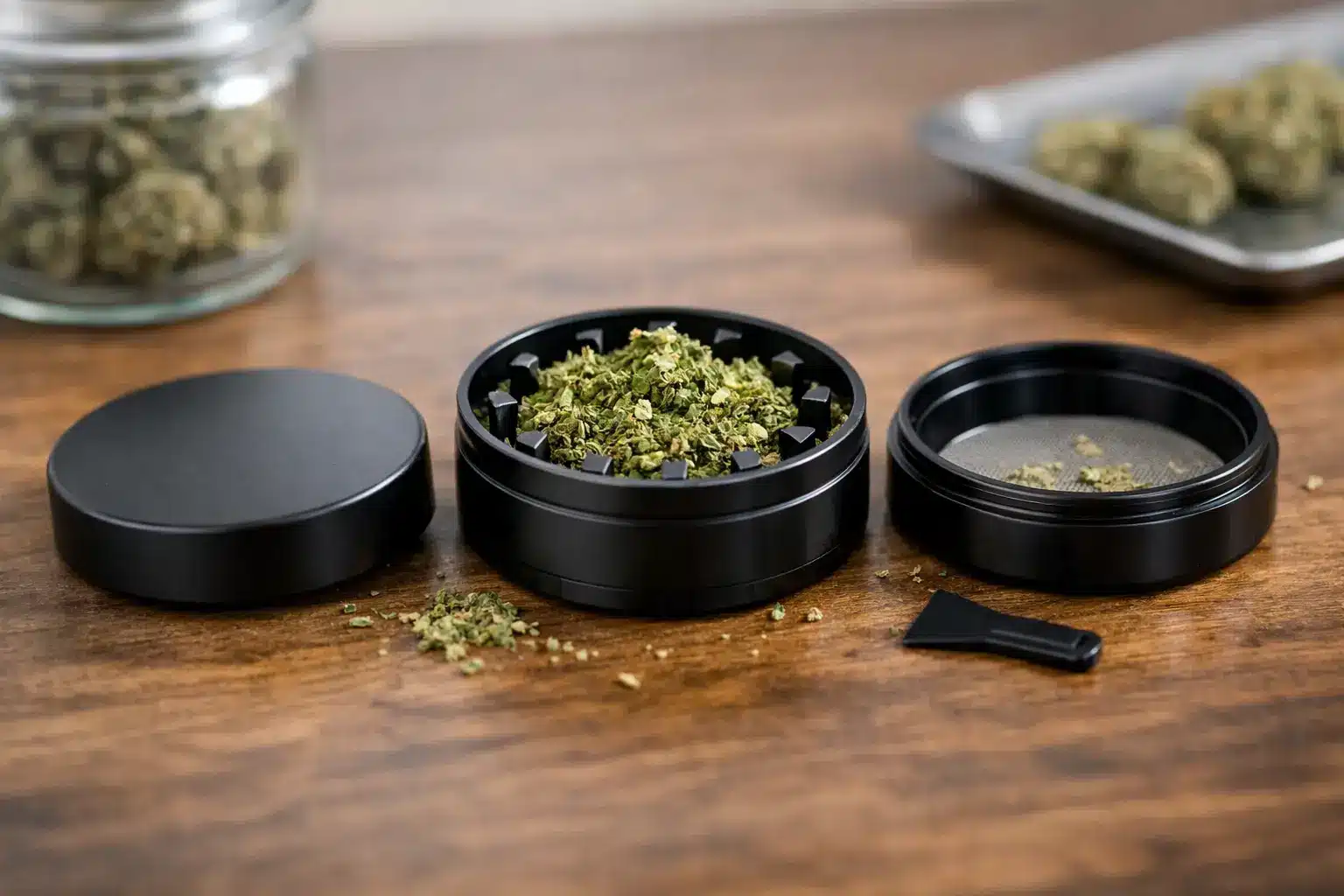
Cheap threaded grinders usually fail the same way: a little resin reaches the lid, the threads bind, and a simple twist turns into a fight. That is exactly why a weed grinder with no threads is more than a design preference. It is a better mechanical answer to one of the most common problems in herb preparation.
A threadless grinder replaces screw-on chambers with a precision-fit magnetic closure. There is no narrow spiral channel to clog, no chance of cross-threading the lid, and no need to force sticky aluminum parts apart. For smokers who use their grinder regularly, that difference shows up every single session.
What Is a Weed Grinder With No Threads?
A threadless weed grinder uses powerful magnets and tight machining tolerances to hold its sections together rather than relying on traditional screw threads. The lid lifts off and snaps securely back into place. On multi-piece grinders, the lower chambers are also designed to separate cleanly without the gritty, resin-packed threading found on mass-market grinders.
The concept is simple, but execution matters. Magnets alone do not make a grinder premium. The mating surfaces must be machined accurately enough to sit flush, remain stable during use, and open easily when it is time to access your ground herb. Poorly made magnetic grinders can feel loose or misaligned. A properly machined model feels deliberate, solid, and controlled.
That is the advantage of CNC-machined 6061-T6 aluminum. It gives the manufacturer the ability to hold tighter tolerances than cheap cast-metal grinder construction. The result is a tool that closes cleanly, turns smoothly, and stays reliable after years of use.
Why Threads Are the Weak Point
Threads work well when they stay clean. A grinder is not a clean mechanical environment. Ground herb, sticky trichomes, fine plant particles, and pocket lint all find their way into the areas where threaded chambers connect. Over time, that buildup creates friction and makes the grinder harder to open.
The problem gets worse when someone tries to force it. Aluminum threads can cross-thread, especially on low-quality grinders with rough finishing or loose tolerances. Once the threads are damaged, the chamber may never sit correctly again. A grinder that was supposed to be a daily tool becomes something you avoid using.
A weed grinder with no threads removes that failure point. Instead of twisting through resin-coated grooves, you lift the lid or separate the chamber directly. Cleaning is faster because there are fewer tight channels where residue can hide. The grinder is also easier to use one-handed, which matters more than most people expect when they are packing a bowl, rolling, or preparing herb at the end of a long day.
Threadless construction does not mean a grinder never needs cleaning. Any quality grinder benefits from occasional maintenance. It does mean the areas most likely to seize up are no longer built into the design.
Magnetic Closures Should Feel Secure, Not Fragile
Some buyers hear “magnetic” and picture a lid that pops off in a backpack. That concern is fair when the product uses weak magnets or loose construction. A serious threadless grinder should have enough magnetic holding power to stay shut during normal handling while still opening without a wrestling match.
The fit is just as important as the magnets. When the lid lands squarely on a properly machined rim, the connection feels precise. There should not be rattling, side-to-side play, or a crooked gap around the edge. This is where a precision-made grinder separates itself from a novelty accessory.
There is one trade-off to understand. A threaded grinder can create a highly sealed connection when its threads are clean and intact. A magnetic grinder prioritizes speed, clean access, and hassle-free operation. For most users, that is the better daily-use balance. If you carry loose herb in a grinder inside a bag, keep it upright or use a dedicated storage container. A grinder is built to process herb first, not replace an airtight stash jar.
Better Access to Every Grinder Configuration
Threadless design works across the grinder formats people actually use. The right number of pieces still depends on how you prefer to prepare and collect your herb.
A 2-piece grinder is direct and fast. It grinds herb between its teeth and is easy to empty immediately. It is the right choice for users who want the fewest parts, the quickest cleanup, and a compact everyday tool.
A 3-piece grinder adds a storage chamber beneath the grinding plate. That extra room lets users grind a larger amount without needing to empty the teeth section right away. It is a strong middle ground for people who want convenience without a separate collection screen.
A 4-piece grinder adds a screen and lower collection chamber for fine material. It is the preferred setup for many dedicated consumers because it separates ground herb from what falls through the screen over time. The trade-off is additional parts and a little more cleaning, but a well-designed threadless 4-piece grinder makes chamber access far less frustrating.
In every configuration, no threads means no repeated twisting through sticky buildup. You get the utility of the chamber layout you want without inheriting the most annoying part of traditional grinder ownership.
Teeth, Material, and Tolerances Matter More Than Marketing
A magnetic lid cannot rescue bad grinding performance. The teeth still have to cut efficiently, the chambers need to align correctly, and the body must resist dents and wear. This is why material and manufacturing method should be at the center of your buying decision.
6061-T6 aluminum is a serious choice for a premium herb grinder. It is lightweight enough for daily carry, strong enough to handle pressure, and well suited to precision CNC machining. Compared with cheap zinc alloy grinders, quality aluminum construction avoids the vague, gritty feel that comes from soft casting and poor surface finishing.
Look closely at the tooth pattern, too. Sharp, consistent teeth pull herb apart instead of crushing it into uneven clumps. A clean, even grind improves packing, helps a joint burn more consistently, and makes bowls easier to load. Ultra-fine powder is not always the goal. Most users want an even, fluffy texture that is easy to handle and appropriate for their preferred method.
The machining between every component determines whether the grinder keeps that performance. Tight tolerances help the lid seat correctly, keep the teeth from rubbing where they should not, and make each chamber feel like part of one complete tool instead of a stack of cheap parts.
Who Should Choose a Threadless Grinder?
A threadless design is especially useful for anyone who has owned a grinder that jammed shut, stripped its threads, or became difficult to clean after a few months. It also makes sense for consumers upgrading from plastic, acrylic, or low-cost metal grinders that never delivered a consistent result.
It is not only for heavy users. Newer consumers often benefit from the straightforward operation just as much. There is less to learn, less chance of misaligning a lid, and less frustration when it is time to empty the grinder. Experienced smokers, meanwhile, recognize the value immediately: fewer moving problems, cleaner chamber access, and a more dependable tool on the table.
At Tahoe Grinder Co, threadless magnetic construction is paired with in-house USA CNC machining because the details are the product. The goal is not to make another disposable accessory. It is to build the grinder you reach for every day and still trust years from now.
How to Keep a Threadless Grinder Performing Like New
The biggest benefit of a no-thread grinder is that maintenance stays simple. Brush loose herb from the teeth and chamber rims after use when needed. If residue begins to affect the action, disassemble the grinder and clean the accessible surfaces carefully with the appropriate materials for aluminum.
Avoid treating the magnets or contact surfaces like they are indestructible. Do not scrape aggressively with hard steel tools, and do not let ground herb build into a thick ring around the closure points. A few minutes of occasional care protects the smooth, satisfying action that made you choose a premium grinder in the first place.
The best grinder should disappear into your routine. It should open when you need it, grind evenly under pressure, and never make you fight a sticky lid. Choose a threadless design built with real precision, and your next session starts with a tool that simply does its job right.