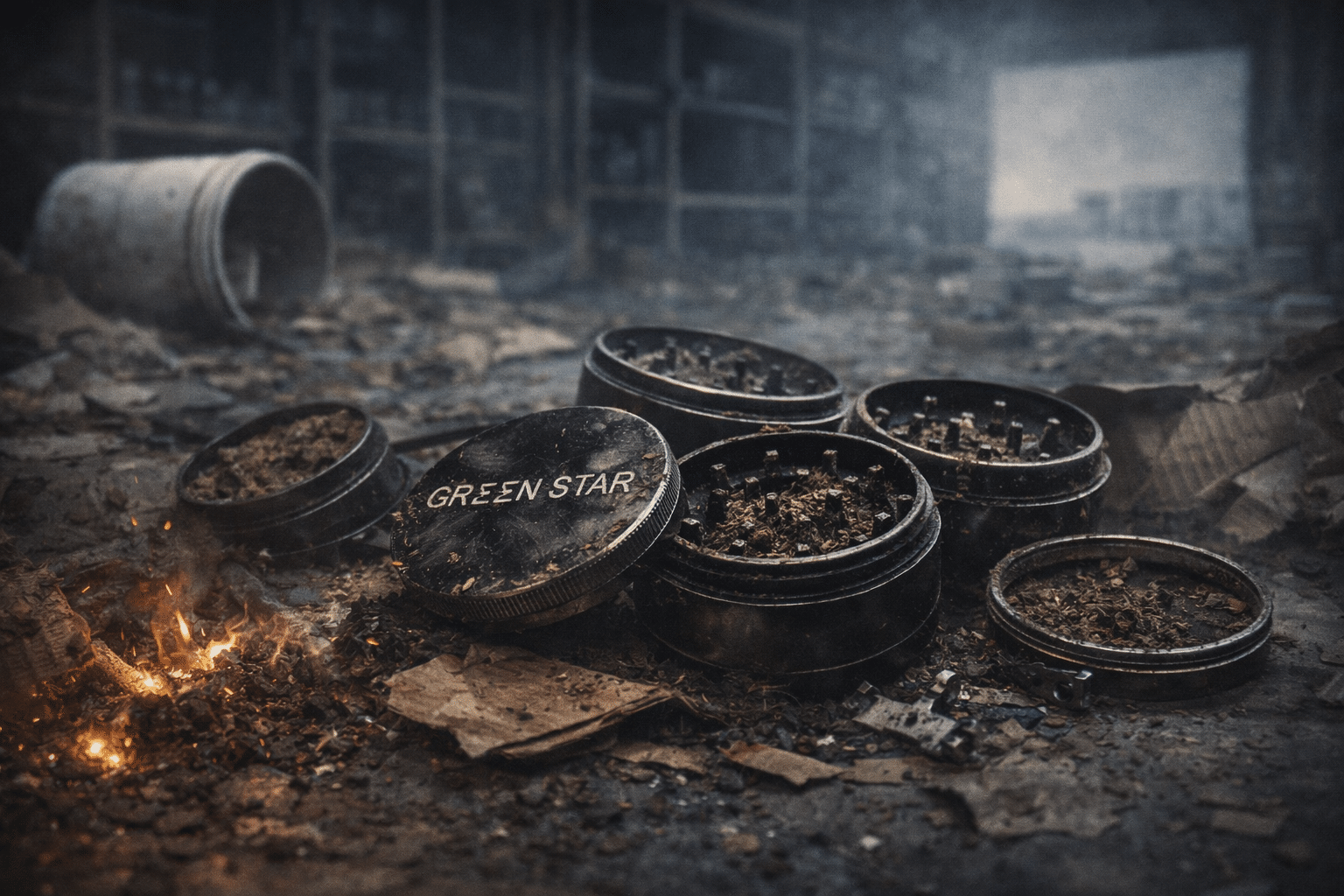
And what it looks like when copycats disappear while real brands keep building
TL;DR: Nothing happened. The brand was never real in any operational sense, never moved the market, and vanished without leaving a mark.
There’s a quiet moment in every competitive industry when the noise stops.
Accounts go inactive. Websites fade. New product “drops” never come.
That’s what happened with GreenStar Grinders.
They’re out of business now — and while some brands vanish because the market is unfair, GreenStar vanished for a simpler reason: they never led, they only followed.
How Green Star Came Onto the Radar
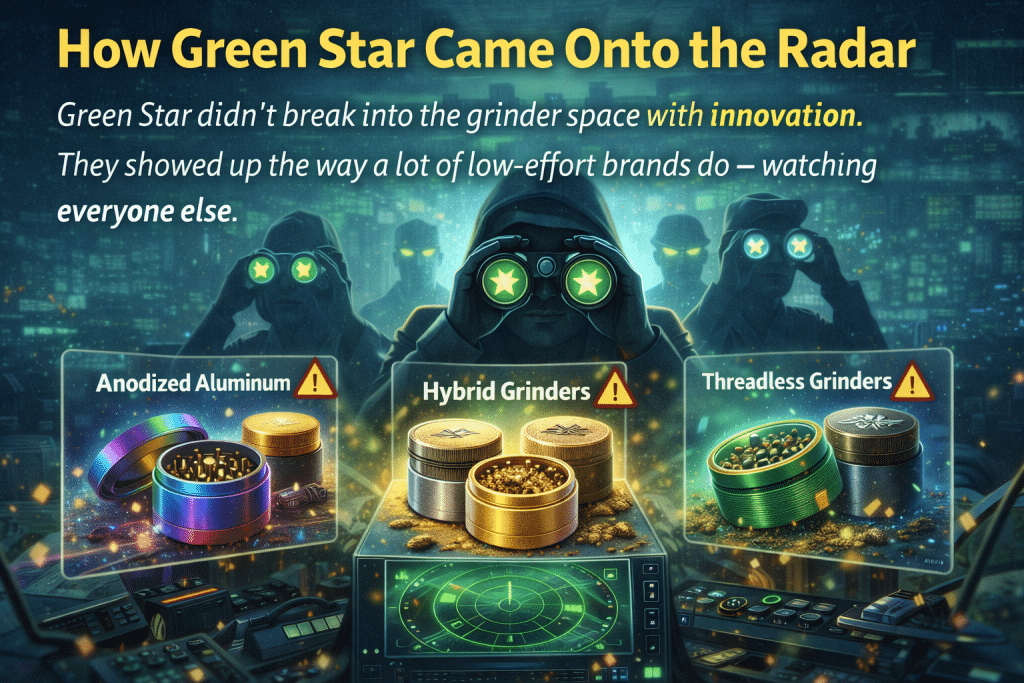
Green Star didn’t break into the grinder space with innovation. They showed up the way a lot of low-effort brands do — watching everyone else.
We noticed them the same way many legitimate manufacturers notice copycats today:
Instagram story views. Repeatedly. Consistently. Predictably.
Every time Tahoe Grinder Company previewed a new design, finish, or direction, Green Star was there — quietly watching. And not long after, a familiar pattern followed.
A “new” Green Star grinder would appear:
- cheaper
- less refined
- weaker machining
- watered-down aesthetics
Same idea. Different execution. Lower ceiling.
Copying Isn’t Competition
Let’s be clear about something the grinder industry understands well:
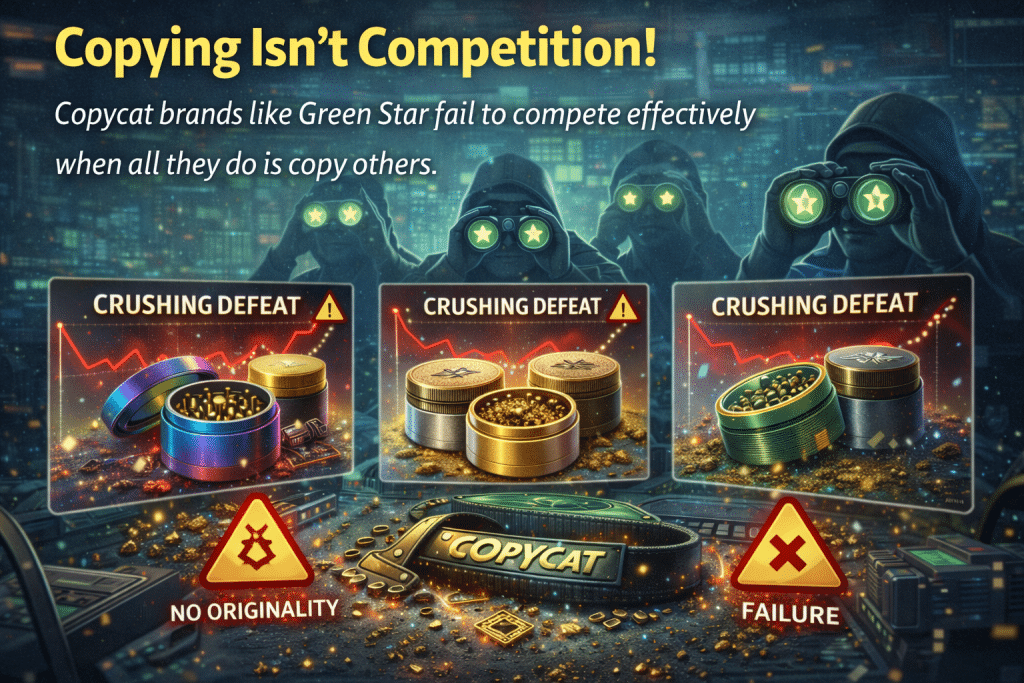
Copying doesn’t make you competitive.
It makes you dependent.
Green Star was never setting trends. They were reacting to them. And reaction-based brands are always late — late to market, late to relevance, and late to reality.
While Tahoe Grinder Company was:
- building wholesale relationships coast to coast
- stocking shelves nationwide
- shipping volume to real retailers
- maintaining consistent quality
Green Star was playing catch-up — releasing imitations after the moment had already passed.
Wholesale Reality vs. Wishful Thinking
In wholesale, reputation moves faster than marketing.
Buyers talk.
Distributors notice patterns.
Retailers learn which brands sell — and which ones just take up shelf space.
Green Star never became a leader because leaders create demand. Green Star chased it.
They weren’t driving the market.
They were hoping to siphon off momentum built by others.
That strategy only works for as long as the original brand keeps doing the heavy lifting — and even then, margins get thinner every step of the way.
The Cost of Being “Cheaper”
There’s always a cheaper grinder.
But “cheaper” without:
- better engineering
- better machining
- better distribution
- better branding
is just a countdown clock.
Green Star’s versions weren’t evolutions — they were downgrades. And in a category where feel, finish, and performance matter, that difference shows up fast.
Customers notice.
Retailers notice.
Reorders don’t happen.
Why Green Star Is Gone — and Others Aren’t

Green Star didn’t fail because the grinder industry is harsh.
It failed because imitation doesn’t scale.
When your product roadmap depends on watching someone else’s Instagram stories, you don’t have a roadmap — you have a rearview mirror.
Eventually, the brands doing the real work keep moving forward.
And the ones copying them fall behind.
Quietly.
What It Looks Like to Still Be Here

Tahoe Grinder Company is still in business because it didn’t build its name by copying. It built it by:
- owning its designs
- protecting its IP
- committing to wholesale relationships
- delivering consistent quality at scale
That’s what longevity looks like in this industry.
Not watching stories.
Not chasing trends.
Not releasing knockoffs after the fact.
Just building — year after year.
Final Word
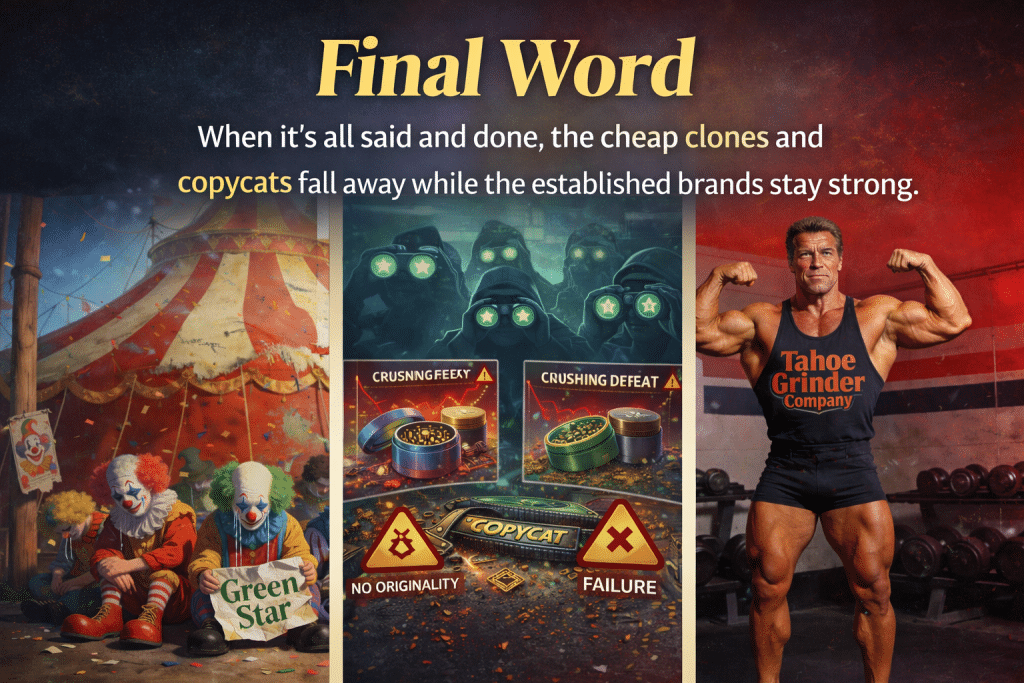
GreenStar Grinders didn’t disappear overnight.
They faded the way copycat brands always do — slowly, quietly, and without a legacy.
The grinder industry doesn’t reward imitation.
It rewards execution.
And that’s why some brands are still here — and others are just names people used to see in their story views.