
How distributor cosplay, fake scale, and Instagram fantasies killed a wholesale operation
Let’s be clear about something most people outside the smoke shop industry don’t understand:
Wholesale distribution is not sexy.
If it looks sexy, something is already wrong.
Toobs Distribution is a near-perfect example of what happens when a company confuses looking like a distributor with actually being one — and then doubles down on the illusion until the math finally taps them on the shoulder.
Hard.
Instagram Famous ≠ Distributor Competent

Toobs Distribution didn’t grow because it solved distribution problems.
It grew because it looked cool online.
High follower counts.
Polished photos.
Southern California vibes.
A warehouse that looked like a lifestyle brand headquarters instead of what a distributor actually needs.
That might work if you’re selling merch to fans.
It does not work when you’re selling glass, wraps, grinders, and water pipes to smoke shops in:
- Nebraska
- Iowa
- Kansas
- rural Texas
- middle-of-nowhere Arizona
Here’s a reality check most California startups never internalize:
A smoke shop owner in Nebraska does not care — at all — that your warehouse is walking distance from the ocean.
He doesn’t care about your lighting.
He doesn’t care about your Instagram aesthetic.
He doesn’t care about your office furniture.
He cares about three things:
- Price
- Availability
- Shipping speed
That’s it. Full stop.
The Southern California Cost Trap
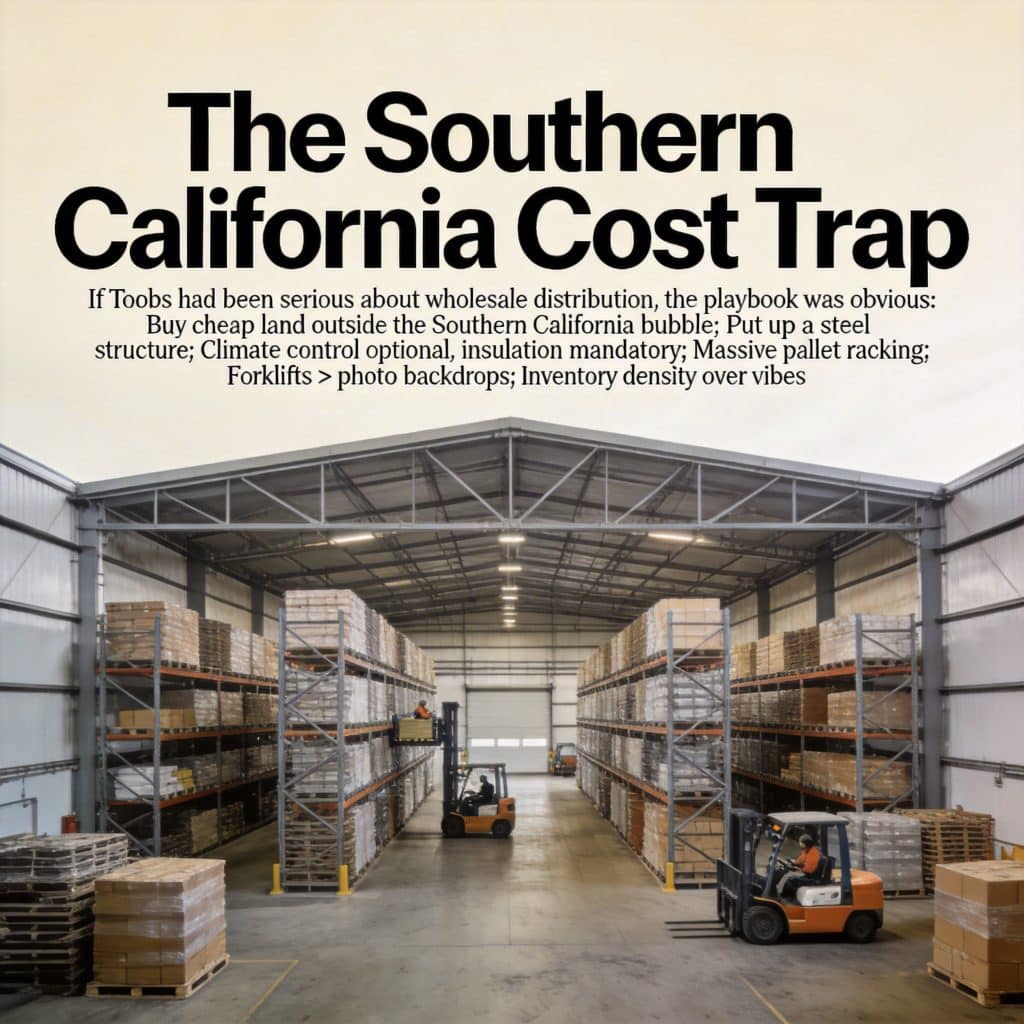
If Toobs had been serious about wholesale distribution, the playbook was obvious:
- Buy cheap land outside the Southern California bubble
- Put up a steel structure
- Climate control optional, insulation mandatory
- Massive pallet racking
- Forklifts > photo backdrops
- Inventory density over vibes
Instead, they rented expensive space in coastal-adjacent Southern California — one of the highest-cost logistics regions in the country.
Let that sink in.
They chose:
- higher rent
- higher labor costs
- higher insurance
- higher utilities
- less square footage
All to impress… who, exactly?
Not the customer.
Fake Scale Is Worse Than No Scale
Toobs looked big.
They weren’t built big.
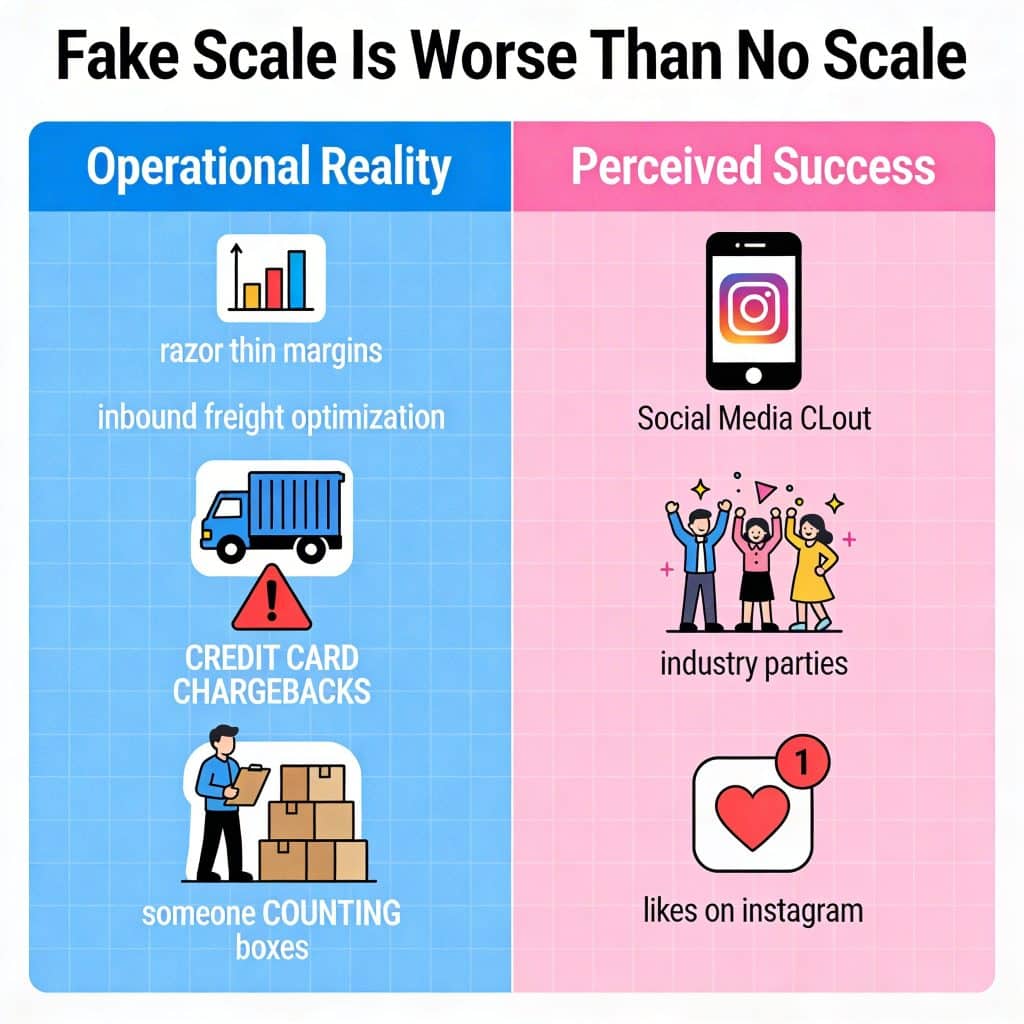
Real distributors obsess over:
- SKU velocity
- pallet turns
- inbound freight optimization
- dead inventory percentages
- chargebacks
- shrink
- razor-thin margins
Toobs obsessed over:
- appearances
- social media clout
- “being seen”
- industry parties
- branding optics
That’s not scale.
That’s cosplay.
Real scale is boring. It’s forklifts at 6 a.m. It’s arguing with freight carriers. It’s counting boxes, not likes.
Logistics Were an Afterthought — and It Showed
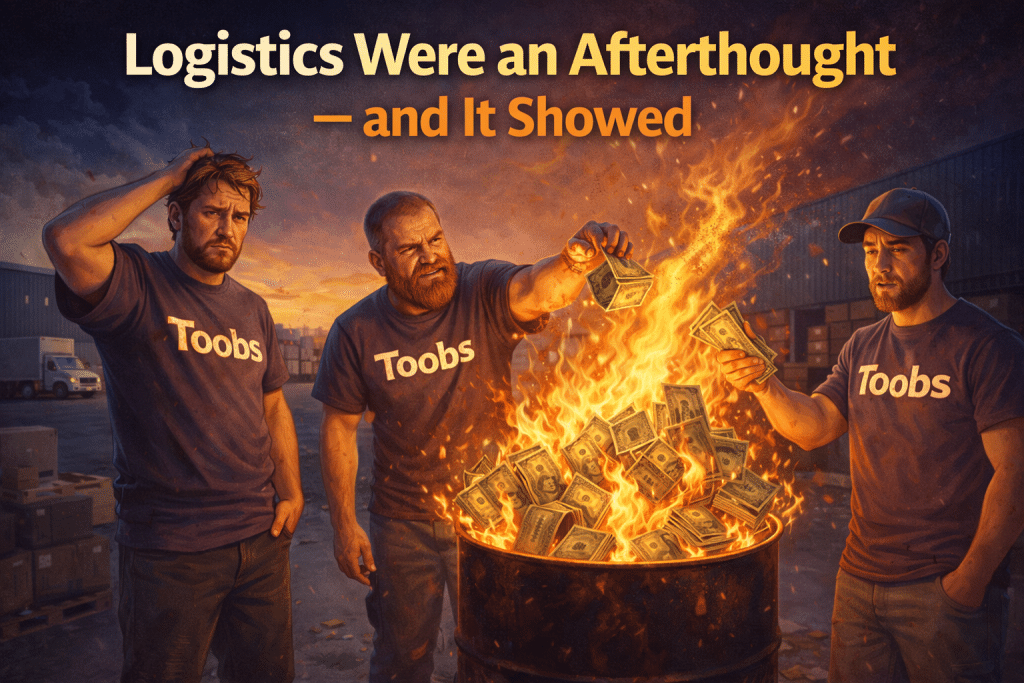
Wholesale lives or dies on logistics discipline.
Instead of building infrastructure that could:
- ship cheap glass fast
- absorb distributor pricing pressure
- undercut competitors on landed cost
Toobs burned money on:
- rent that added no value
- staffing that didn’t move inventory faster
- a location that actively worked against their margins
Ocean views don’t make pallets move faster.
Instagram followers don’t lower UPS rates.
Branding doesn’t fix freight math.
California Execution for a Non-California Customer Base
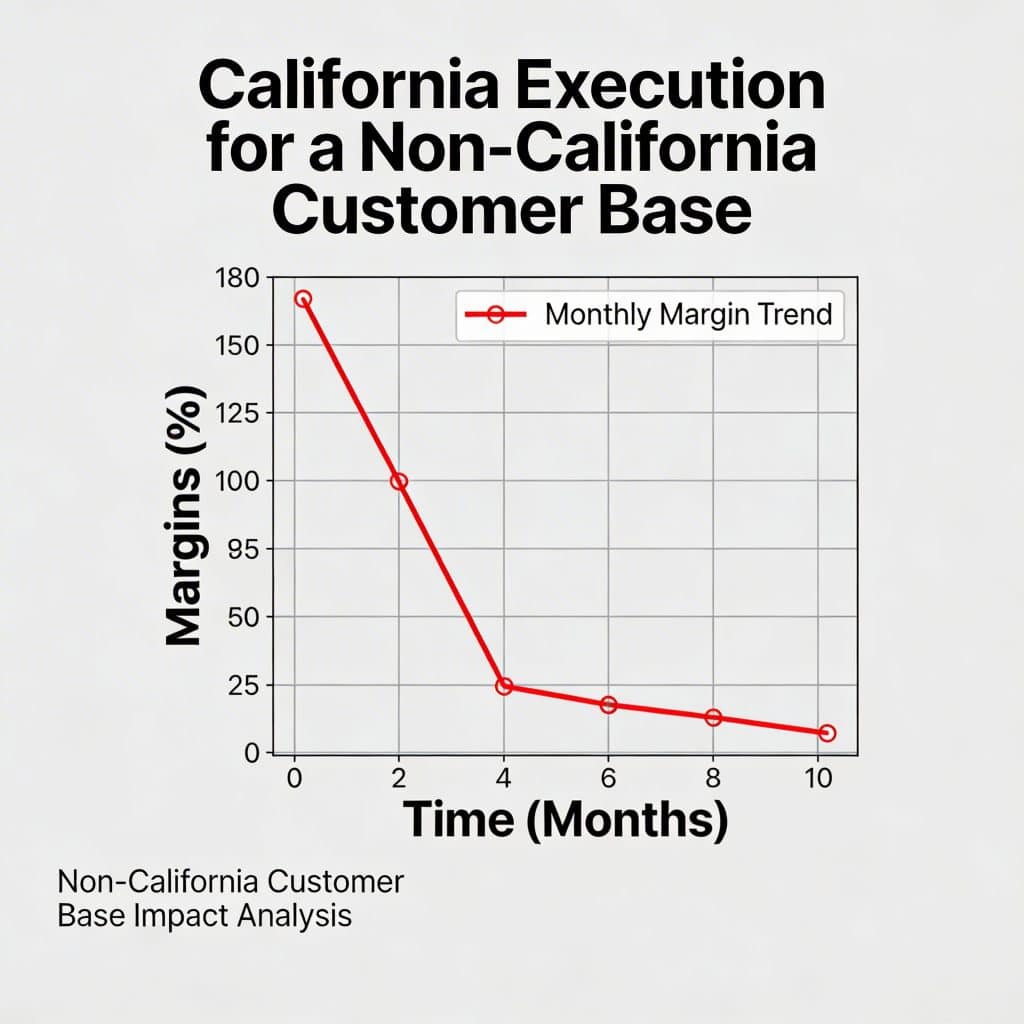
This is the mistake that killed them.
They executed like they were selling to:
- LA dispensaries
- Venice Beach influencers
- lifestyle buyers
But their actual customers were:
- price-sensitive smoke shops
- rural retailers
- mom-and-pop stores
- buyers who reorder based on pennies, not vibes
You cannot run a Midwest-facing wholesale operation with a California lifestyle cost structure. The margins will never forgive you.
And they didn’t.
When the Math Finally Spoke

Eventually, reality shows up.
Inventory slows.
Margins compress.
Rent doesn’t care.
Payroll doesn’t care.
Insurance doesn’t care.
And when you don’t have:
- owned land
- controlled costs
- logistics efficiency
- defensible scale
There’s no pivot. There’s just an exit.
Toobs Distribution didn’t reinvent itself.
It didn’t restructure.
It didn’t decentralize.
It folded.
Quietly.
The Pattern Repeats
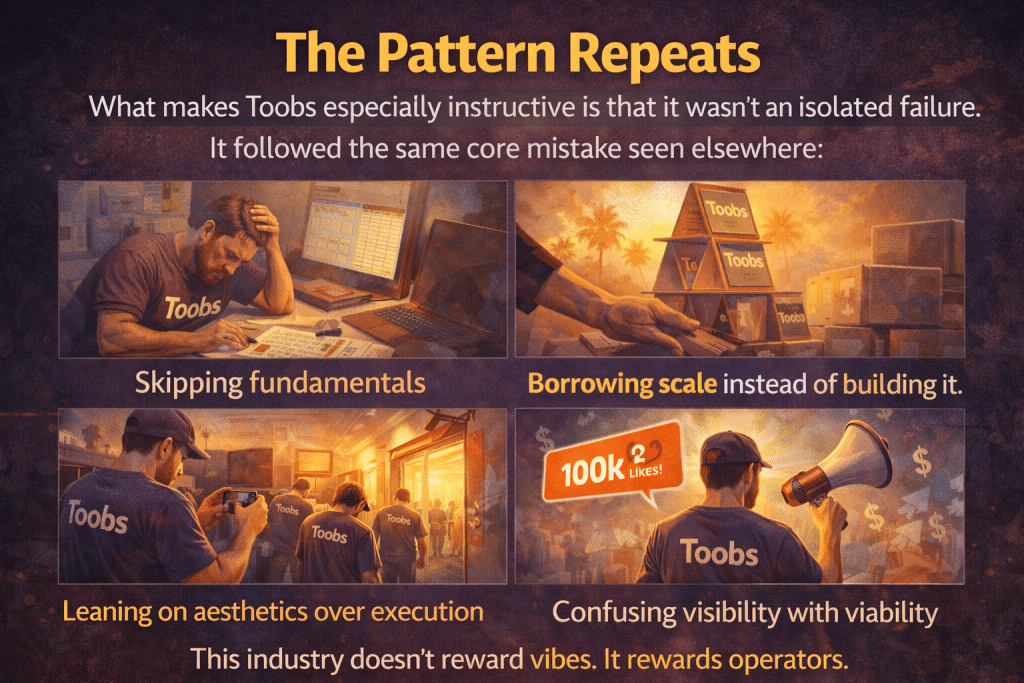
What makes Toobs especially instructive is that it wasn’t an isolated failure. It followed the same core mistake seen elsewhere:
- skipping fundamentals
- borrowing scale instead of building it
- leaning on aesthetics over execution
- confusing visibility with viability
This industry doesn’t reward vibes.
It rewards operators.
Final Reality Check for Anyone Reading This

If you’re thinking about starting a smoke shop distribution company, understand this:
- Your warehouse should be ugly and cheap
- Your rent should make you smile
- Your Instagram should be an afterthought
- Your inventory should scare you with how much of it you have
- Your margins should survive a bad month
If you’re trying to look like a baller before you can ship a box cheaper than the guy next to you, you’re already out of business — you just don’t know it yet.
Toobs Distribution didn’t fail because the industry is unfair.
It failed because the math doesn’t care how cool you look.
And the math always wins.