
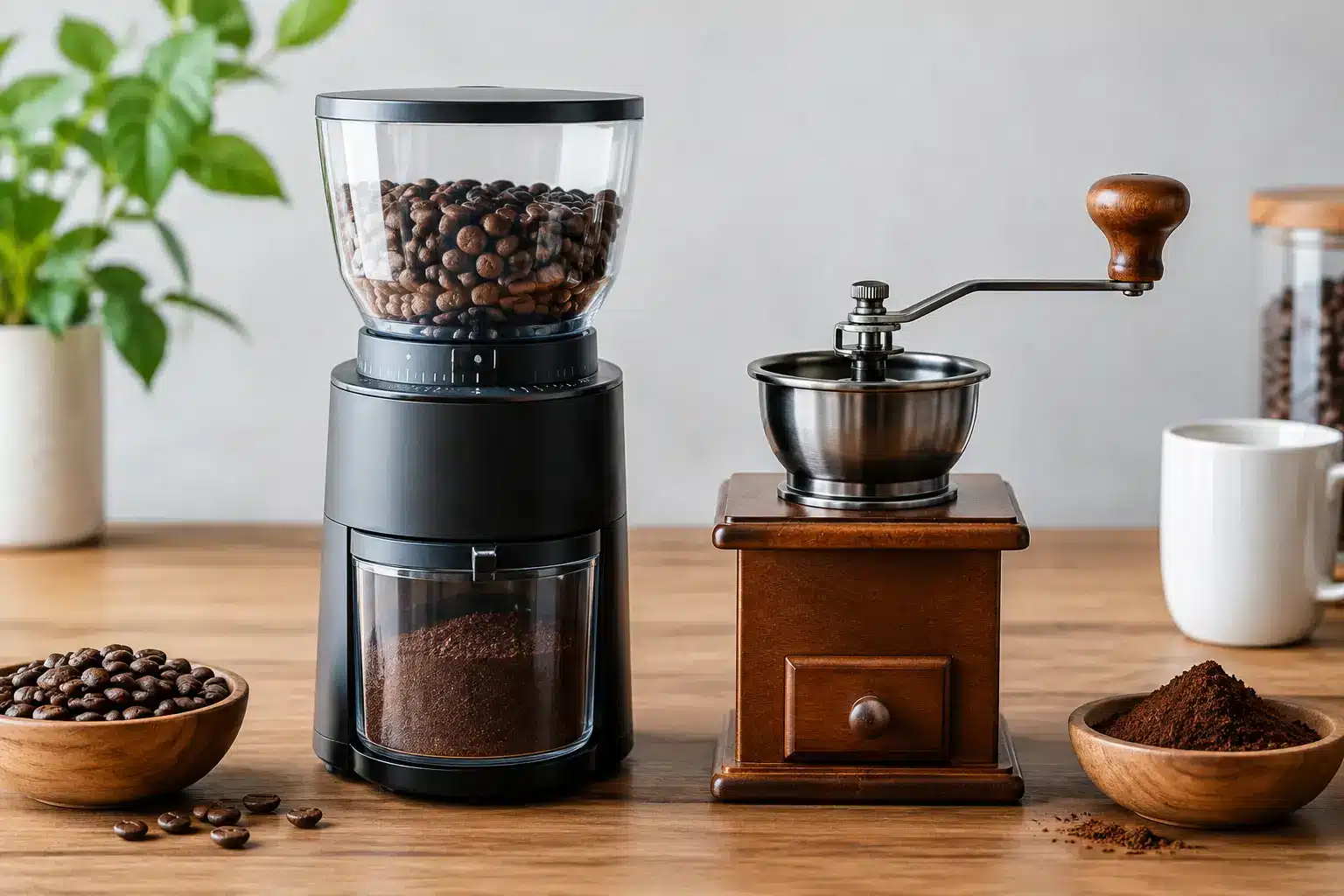
A grinder versus coffee mill comparison looks simple until you care about the texture of your flower, the condition of your tools, and what ends up in your rolling tray. Both devices break material down, but they are engineered for different jobs. A purpose-built herb grinder gives dried flower a controlled, fluffy, usable consistency. A coffee mill is designed to turn beans into particles for extraction, often with more speed, force, and mess than flower needs.
If you are tired of hand-breaking buds, fighting a cheap grinder that binds, or seeing your flower turn into dusty powder, the difference matters. The right tool protects the material, improves consistency, and makes every session easier to prepare.
Grinder Versus Coffee Mill: The Core Difference
A cannabis grinder is built to separate and cut dried herb with teeth arranged across two grinding surfaces. As the lid turns, the teeth pull flower apart rather than aggressively chopping it. The goal is an even grind that stays light enough to burn properly, pack cleanly, and move through your preferred smoking setup without clogging it.
A coffee mill does something else. The term can describe a burr mill, which crushes beans between two abrasive surfaces, or the small electric blade grinder found in many kitchens. Burr mills are made for repeatable coffee particle sizing. Blade models rely on high-speed impact. Neither is designed around the structure, stickiness, or resin content of dried flower.
That does not mean a coffee mill is incapable of breaking up herb. It means the output is harder to control and the compromises show up quickly. Flower can collect around blades, get pulverized unevenly, or become overly fine in a matter of seconds. Once it is powder, you cannot put the texture back.
Why Consistency Changes the Experience
The best grind is not necessarily the finest grind. It is the most appropriate one for how you plan to use the flower.
For a hand-rolled joint or blunt, you usually want a soft, uniform texture that distributes evenly and allows steady airflow. For a dry-herb bowl, slightly larger pieces can be ideal because they promote airflow without pulling loose material through. A coffee mill can produce a mix of large chunks, shredded leaf, and dust in the same batch. That inconsistency makes packing and burning less predictable.
A quality herb grinder gives you direct control. You can turn the lid a few times for a coarser result or keep going for a finer, more even texture. There is no motor forcing the process past the point you intended. This is especially useful with drier flower, which can turn to powder quickly, and with denser flower, which needs clean cutting teeth rather than brute force.
Coffee mills also tend to create more friction and agitation than necessary. With dried flower, that can mean resin collecting in the wrong places, material sticking to the chamber, and flavor from prior coffee use transferring into your herb. A dedicated grinder keeps your preparation tool dedicated to the material it is meant to handle.
Manual Control Beats High-Speed Chopping
A blade-style coffee grinder is the weakest option for flower because it has no true particle-size control. You pulse it, stop it, shake it, and hope you caught it at the right moment. A short pulse may leave buds mostly intact. One extra pulse can create a fine, leafy dust that burns hot and can make a roll or bowl feel less clean.
Burr coffee mills offer better consistency for coffee, but their tight grinding path is still optimized for hard, brittle beans. Flower is soft, fibrous, and often sticky. It can compress rather than pass cleanly through, leaving residue on burrs and in narrow passages that are inconvenient to clean.
A manual herb grinder is more deliberate. You feel resistance as the teeth engage, so you know whether the flower needs another turn. That physical feedback is part of the advantage. It allows the user to adjust for moisture level, density, and desired texture instead of accepting whatever an electric appliance produces.
The Build Quality That Separates a Real Grinder
Not every herb grinder deserves to win this comparison. Cheap grinders can have dull teeth, weak threads, rough interiors, and coatings that wear under regular use. They may work for a few weeks, then start jamming or leave metal-on-metal friction where smooth operation should be.
A serious grinder starts with the material. CNC-machined 6061-T6 aluminum offers a strong balance of low weight, durability, and precise manufacturing. The teeth can be cut accurately, the chambers can align properly, and the finished tool can hold up to years of daily turning without feeling disposable.
The details matter just as much as the metal. Sharp, well-spaced teeth break flower apart efficiently without mashing it into a compacted wad. Strong magnets keep the lid secure. Smooth chamber interfaces reduce binding. A well-designed collection chamber makes it easy to access ground herb instead of forcing you to scrape it from awkward corners.
That is why Tahoe Grinder Co manufactures its grinders in-house in the USA, controlling machining, finishing, assembly, inspection, and fulfillment rather than relying on generic imported hardware. The difference is not a logo stamped onto a grinder. It is control over how the tool fits, turns, and performs over time.
Which Grinder Configuration Makes Sense?
The coffee mill comparison answers one question: use a dedicated herb grinder for dried flower. The next decision is which grinder configuration fits your routine.
2-Piece Grinders
A 2-piece grinder is the most direct design. It has a top and bottom section, with teeth on both sides. You grind the flower and remove it from the same chamber. This is a strong choice for users who want a compact tool, quick preparation, and minimal parts to manage.
Because there is no separate storage chamber, it works best when you grind what you plan to use right away. It is simple, portable, and easier to clean than a multi-chamber design.
3-Piece Grinders
A 3-piece grinder adds a dedicated chamber below the teeth. The ground flower falls through holes into that lower section, separating it from the grinding area. This gives you cleaner access to your material and lets you grind a bit more at once without crowding the teeth.
For many regular users, this is the practical middle ground. You get the control of a purpose-built grinder with more capacity and convenience than a basic 2-piece setup.
4-Piece Grinders
A 4-piece grinder includes a screen and a lower collection chamber. Ground flower stays in the main chamber while finer trichome material can pass through the screen over time. It is a useful configuration for people who want separated storage and appreciate getting full value from the material they prepare.
The trade-off is more components and more cleaning surfaces. For the user who wants maximum functionality from one tool, that is usually a worthwhile exchange. For someone who prioritizes the fastest possible grind-and-go routine, a 2-piece or 3-piece model may be the better fit.
Capacity Matters More Than Most Buyers Expect
A compact grinder is easy to carry, but it can become frustrating if you regularly prepare larger buds or pack for more than one person. Overfilling any grinder reduces cutting efficiency because the teeth cannot move through the flower freely. That is when people force the lid, damage threads, or blame the grinder for a capacity issue.
Choose a diameter that matches your routine. Smaller grinders make sense for portability and personal use. Larger models offer more room for dense flower, fewer reloads, and a more comfortable grip. An oversized 90mm grinder is not necessary for everyone, but for frequent users who want serious capacity, it is a clear upgrade over repeatedly packing a tiny chamber.
A coffee mill may seem like the fastest answer for large quantities, but speed is not the same as control. A larger, precisely machined herb grinder handles volume while keeping the material in your hands and the texture within your control.
Cleaning Is Part of Performance
Any grinder will eventually collect residue, especially with fresh, sticky flower. The difference is whether that buildup is manageable or whether it turns a tool into a chore.
Avoid forcing a grinder that feels tight. Remove remaining material, use a soft brush to clear teeth and chamber edges, and keep the mating surfaces free from packed residue. With a quality aluminum grinder, routine care is straightforward because the parts are made to fit correctly from the start.
A coffee mill is harder to dedicate and maintain. Its blades, burrs, and internal passages are designed for coffee grounds, not resinous plant material. Cleaning can be more involved, and using the same appliance for coffee afterward is an obvious flavor compromise. One tool for beans and one tool for flower is simply the cleaner setup.
The best preparation tool should not make you work around its flaws. Choose the grinder size and chamber configuration that fit how you use flower, then buy one made with the precision to keep doing that job year after year.