
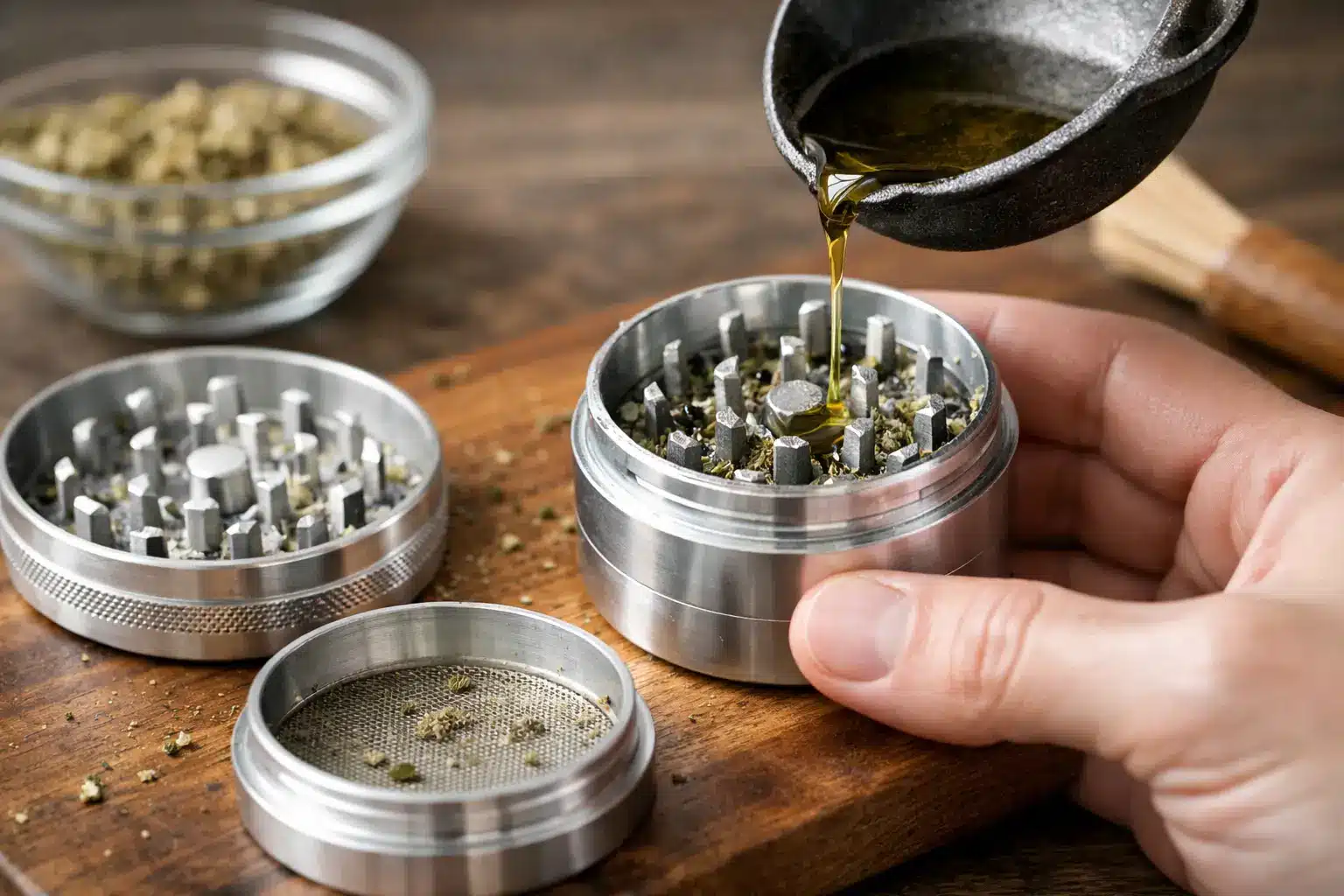
A fresh aluminum grinder should feel sharp, clean, and ready to work – but it may not feel fully broken in on its first few turns. Knowing how to season an aluminum grinder helps you clear away any trace dust from manufacturing or shipping and lets the teeth begin developing a natural, herb-friendly working surface. Done correctly, seasoning is simple. It is not a chemical treatment, and it should never involve oil, spices, or anything you would not want near your flower.
For serious cannabis consumers, the goal is straightforward: clean flavor, consistent texture, and a grinder that turns smoothly session after session. A quality CNC-machined grinder starts ahead of the pack because its teeth, threads or magnetic closure, and chamber fit are built to tighter tolerances. Still, a proper first clean and a short break-in process are smart ownership habits.
Does an Aluminum Grinder Actually Need Seasoning?
“Seasoning” is a loose term in the grinder world. You are not seasoning aluminum the way you season cast iron. Aluminum does not need a layer of cooking oil, and adding one is a fast way to make your grinder sticky, collect debris, and compromise the taste of your herb.
What people generally mean by seasoning is using a small amount of dry flower to condition the grinding surfaces after cleaning. The first pass picks up any fine particulate that may remain in the teeth or corners. It also gives a brand-new grinder its first light coating of natural herb oils, which can make the action feel less raw than a completely dry, unused tool.
A premium grinder that has been properly manufactured, finished, inspected, and packed should not arrive dirty. But a first-use clean remains worthwhile, especially if you want full control over what touches your flower. It is a five-minute step that protects the experience you paid for.
How to Season an Aluminum Grinder in 3 Steps
1. Clean it before adding herb
Take the grinder apart completely. Separate the lid, grinding plate, storage chamber, screen section, and kief catcher if you are using a 4-piece model. Use a soft brush or dry microfiber cloth to remove loose dust from the teeth, interior walls, threads, and screen.
If the grinder needs more than a dry wipe, wash the non-screen aluminum components with warm water and a small amount of mild dish soap. Rinse thoroughly and let every piece dry completely before reassembly. Moisture is the enemy of clean grinding. Water caught around teeth, inside threads, or beneath a screen can trap plant material and create unnecessary buildup.
Do not use harsh solvents, steel wool, or aggressive scouring pads. They can damage finishes, scratch the aluminum, or leave residue behind. A precision-machined grinder does not need to be attacked to be cleaned.
2. Run a small amount of dry herb through it
Choose a small pinch of dry, ordinary flower – not your most expensive cultivar and not especially sticky, fresh, or dense bud. Break it into pieces that fit naturally between the teeth, then close the grinder and turn it with steady, controlled pressure.
You should not need to force a well-designed aluminum grinder. If it resists, use less flower or break up the nug slightly before loading it. Overpacking is one of the main reasons a new grinder feels difficult to turn, and it is not a meaningful way to speed up the break-in process.
Grind that first small load, then empty the chamber. Many users choose to discard the first grind because it has done its job collecting anything left behind after cleaning. If you are especially particular about flavor purity, repeat this step with another small pinch and discard that one as well.
3. Wipe, reassemble, and use normally
After the initial pass, inspect the teeth and chamber under good light. Brush away any loose herb dust, wipe the outer surfaces, and make sure the pieces seat together cleanly. Your grinder is now ready for normal use.
There is no need to repeat this full process every week. Seasoning is primarily a first-use practice or something to do after a deep cleaning. From there, regular maintenance is what preserves smooth performance.
What a Proper Break-In Should Feel Like
A good break-in does not turn a poorly made grinder into a great one. If teeth are dull, alignment is sloppy, or threads constantly bind, no amount of sacrificial flower will solve the underlying design problem. That is the difference between a disposable smoke-shop accessory and a serious tool built for long-term use.
With a well-made aluminum grinder, the first few sessions should establish a predictable feel. The lid should close squarely. The teeth should pull flower apart rather than mash it into clumps. The chambers should align without cross-threading, and the finished grind should be consistent enough to pack, roll, or load without fighting oversized chunks.
It depends somewhat on the configuration. A 2-piece grinder has fewer parts and offers the most direct grinding experience. A 3-piece model adds a storage chamber for ground herb. A 4-piece grinder introduces a screen and lower kief chamber, so it has more surfaces to keep clean and more components to inspect during first use. None requires oil or a special seasoning compound.
Never Use Oil, Food Seasonings, or Lubricants
The worst seasoning advice usually comes from confusing an herb grinder with cookware. Do not coat the interior with olive oil, coconut oil, butter, mineral oil, or any other lubricant. Do not rub spices onto the teeth. Do not apply graphite, silicone spray, or household lubricants to moving parts that may contact cannabis.
These shortcuts create more problems than they solve. Oil holds fine plant matter, accelerates sticky buildup, and can alter the aroma and taste of your flower. Food seasonings introduce particles that do not belong in a smoking accessory. Lubricants can migrate into the grinding chamber and are not part of a clean herb-prep routine.
If your grinder is hard to turn, diagnose the real cause. It is usually overpacking, overly sticky material, residue in the teeth, debris in the threads, or a misaligned component. Clean the affected area, reduce the load size, and try again. Mechanical problems need mechanical answers.
Keep Your Aluminum Grinder Running Smoothly
The best maintenance routine is light and consistent. After a few sessions, use a soft brush to clear the teeth and corners. Do not let compressed herb accumulate until the grinder begins to bind. If you use a multi-piece grinder, inspect the screen periodically and clear it gently so airflow and kief collection are not restricted.
Sticky flower requires more attention than dry flower. That does not mean you should avoid high-quality, resinous herb. It means you should load smaller amounts and give the grinder a quick brush more often. A large, precisely machined grinder can handle serious volume, but even the best tool performs better when it is not packed beyond its working capacity.
For a deeper clean, disassemble the grinder and use warm water with mild soap on appropriate aluminum pieces. Let everything air-dry fully before it goes back into service. If your model includes a screen, treat it gently. Screens are designed for separation, not for forceful scraping.
When to Clean Instead of Season
If your grinder suddenly feels rough after months of smooth use, it does not need another seasoning pass. It needs cleaning. Resin buildup around the teeth and inside the mating surfaces creates drag. A few minutes with a brush and a proper wash will restore performance far more effectively than running extra flower through it.
The same applies if you notice uneven grinding. Check for packed material around the outer teeth, stuck flower beneath the grinding plate, or debris preventing the chambers from sitting flush. A grinder should feel like a controlled cutting tool, not a test of hand strength.
Tahoe Grinder Co builds its aluminum grinders for users who expect that kind of control: tight machining, durable material, and a design made to outlast cheap, disposable alternatives. Start it clean, avoid gimmicks, and maintain it with the same intention you bring to choosing your flower.
Your first grind should taste like your herb, not like factory dust, cooking oil, or someone else’s bad advice. Clean the grinder, run a small sacrificial pinch of dry flower through it, and then let precision do what it was built to do.